Every Paper Clip Is Another Life Changed

Each clip=one prostate cancer case.

A small cylindrical plastic container sits on the desk behind me. I am not sure what it originally contained but now it is filled with paper clips. A quick glance tells me it must have a couple of hundred clips inside it, and every day I add a few more. I empty the receptacle a few times a year, but in the meantime, each clip tells me that someone’s life has been changed.

How is that so?

Medicine is more and more digital these days. You complain to your friends about how your internist spends more time typing into their laptop than they do talking to you. Your prescriptions go out to the pharmacy electronically, and reminders about your next appointment zip to your cellphone, instead of coming on a little postcard in the mail.

Here in the lab, we are digital too…but we still use a lot of paper. While most of the blood tests we do are managed without anything written down (each analyzer “talks” directly to the interface that sends results to our docs), we handle our biopsies quite differently.

Our Laboratory Information System (fancy name for lab computer) contains all the necessary information about patient age, and gender, and the site from which a bladder or prostate biopsy has been taken. But when I am looking at cases from 15 or 20 different patients, it really helps to have this data printed out. Also, I like to create paper worksheets for my prostate cases on which I can mark my findings for each of the dozen or so cores from each patient.

When my final diagnosis for the case is benign prostate, I can enter my findings from the worksheet directly into the LIS myself with a few keystrokes, and then add my electronic signature. No extra trees need to be cut for those cases.

But for patients in whom I find cancer, I turn my completed worksheet over to our administrative team. They keyboard the complex findings into the LIS and then print a copy of exactly how my report will appear to the clinicians.

When those printed cancer case reports come back to me, I review the information, correct the rare typos, have one of my colleagues concur on the malignant diagnosis, and affix my electronic signature in the LIS. The report can fly off to one of our urologists through an electronic labyrinth.

But because I need to select the appropriate charge to the patient for the laboratory and pathologist services, the reports are paper clipped to a billing slip. When I separate the report from the billing slip I toss the paper clip into the little container behind me. The container fills, each added clip representing another person given the diagnosis they were dreading and hoping to avoid.

Making those diagnoses is a pretty awesome burden and at times a humbling experience. I just hope that I can be as consistent as a bucket-full of paper clips; doing my job, holding it together, and remembering that there are people whose lives may be altered by every one of those diagnoses. They all deserve the best that I can be.


The above is the opinion of the author and not UroPartners LLC.


Like what you read here? Add your name to our subscription list below. No spam, I promise! ___

#mc_embed_signup{background:#fff; clear:left; font:14px Helvetica,Arial,sans-serif; }
/* Add your own MailChimp form style overrides in your site stylesheet or in this style block.
We recommend moving this block and the preceding CSS link to the HEAD of your HTML file. */

Subscribe to our mailing list

* indicates required
Email Address *
First Name
Last Name
//s3.amazonaws.com/downloads.mailchimp.com/js/mc-validate.js(function($) {window.fnames = new Array(); window.ftypes = new Array();fnames[0]=’EMAIL’;ftypes[0]=’email’;fnames[1]=’FNAME’;ftypes[1]=’text’;fnames[2]=’LNAME’;ftypes[2]=’text’;}(jQuery));var $mcj = jQuery.noConflict(true); ———————————–

Has There Been a Pathologist in YOUR Life?

Tools of the trade.

There are about 21,000 pathologists in the USA. That’s not a lot. And we are a pretty quiet bunch, even though some of us blog, a few of us tweet, and a handful probably Tik Tok and Instagram. Quincy M.E. may have been our show but that ended close to 40 years ago, Jack Klugman himself met his maker early in the last decade.

Yet pathologists matter! We make the diagnoses on the biopsies that influence your treatment. We ensure quality in the numbers that tell how well your diabetes medication is working. We make sure your Covid-19 test is as accurate as current science can provide. We study the genetics of your tumor to predict its aggressiveness or the likelihood of passing it to your children. And we can be the final arbiter of how and why a loved one died.

Whether by nature or whether by circumstances, we are mostly behind the scenes. Unlike your heart surgeon, your internist, or even your urologist, you rarely get to choose your own pathologist. And even less often do you rave about us to your neighbors. “You need a CBC? Your really should get it done at Midtown Clinic–that Dr. Greene is a great pathologist.”

But are there some of you who have known of a pathologist and of the role they played in your healthcare? Maybe it was at a tumor board you attended. Maybe you went out of your way to review your slides with the doctor who read them. Maybe you called with a question about your Prostate Specific Antigen (PSA) blood test.

If any of the above pertains to you, I’d like to know about it. Leave a comment, or drop me a line at les.raff@post.com. Let me know about any pathologists who stood out, who gave you knowledge, who made you feel cared for.

Please share, retweet, or forward this post, especially to those you know who have had an interaction with the healthcare system. I’d like to collect your stories for a future blog, or maybe more.

In the meantime, be well!

The opinions expressed above are those of the author and not UroPartners, LLC.


Like what you read here? Add your name to our subscription list below. No spam, I promise! ___

#mc_embed_signup{background:#fff; clear:left; font:14px Helvetica,Arial,sans-serif; }
/* Add your own MailChimp form style overrides in your site stylesheet or in this style block.
We recommend moving this block and the preceding CSS link to the HEAD of your HTML file. */

Subscribe to our mailing list

* indicates required
Email Address *
First Name
Last Name
//s3.amazonaws.com/downloads.mailchimp.com/js/mc-validate.js(function($) {window.fnames = new Array(); window.ftypes = new Array();fnames[0]=’EMAIL’;ftypes[0]=’email’;fnames[1]=’FNAME’;ftypes[1]=’text’;fnames[2]=’LNAME’;ftypes[2]=’text’;}(jQuery));var $mcj = jQuery.noConflict(true); ———————————–

Hail The Lizard Brain–Pathology’s Friend

lizard-image-courtesy-of-chicago-tribune


I once had an experienced colleague named Paulo who claimed that within a second of starting to examine a Pap smear on his microscope he could tell whether it was going to be abnormal or not. Paulo “could smell it.” Since most pathologists I know have long had their olfactory sense dulled by the constant fetor of formalin and xylene, it was clear he was not literally smelling the glass slide on the microscope stage. Rather, his subconscious mind had taken notice of some subtlety, some minute, undefinable but not insignificant clues, that had his frontal cortex on alert. Soon he would find the cells that would lead to his assigning a grade of atypia to the slide and necessitating follow-up for the patient from which it had come.

I think of Paulo’s words often as I scan through hundreds of prostate biopsy cores each workday. There are definitive characteristics that define cancer of the prostate. Look up the description in a general pathology textbook and you will read about things like large nucleoli and invasive growth pattern. Turn to a text geared more for someone who specializes in urologic pathology and little tips like blue-tinged mucin and red crystalloids are pointed out as useful aids in the diagnosis. But frequently, long before I see those signs, I know I am dealing with a malignant prostate biopsy.

Just like Paulo with his Pap smears, thousands of hours of training and experience have made me aware of undefinable, indescribable, attributes in the patterns I see below me on a microscope slide. Maybe it relates to the density of glands on the slide. Maybe it is the way a certain cluster of those glands traverses the narrow width of the biopsy core. Whatever the signs are they trigger my “lizard brain,” deep in the primitive parts of my grey matter. It puts me on high alert–the odor of cancer is around the corner.

I am sure this feeling is widespread among pathologists. Whether dealing with a colon biopsy, a breast biopsy, or a thyroid gland aspiration, the well-trained, finely tuned pathologist has a sixth sense. Sure, we need to find the definitive microscopic signs, the nucleoli, the abnormal mitoses, the intranuclear inclusions– but sometimes we know before we see them that they will show up.

I suppose the radiologist feels the same way when he first looks at a chest x-ray and the surgeon does too when she first puts her hands on a tender belly. He knows there is a lung tumor, she knows the appendix is ready to burst. It may take a moment before their frontal cortex can describe how they know what they know–but as Paolo used to say, they can smell it.

Jim Morrison was the Lizard King. I will settle for just listening to my internal lizard. Especially when it roars.


Like what you read here? Add your name to our subscription list below. No spam, I promise!
___

#mc_embed_signup{background:#fff; clear:left; font:14px Helvetica,Arial,sans-serif; }
/* Add your own MailChimp form style overrides in your site stylesheet or in this style block.
We recommend moving this block and the preceding CSS link to the HEAD of your HTML file. */
Subscribe to our mailing list

* indicates required
Email Address *

First Name
Last Name

//s3.amazonaws.com/downloads.mailchimp.com/js/mc-validate.js(function($) {window.fnames = new Array(); window.ftypes = new Array();fnames[0]=’EMAIL’;ftypes[0]=’email’;fnames[1]=’FNAME’;ftypes[1]=’text’;fnames[2]=’LNAME’;ftypes[2]=’text’;}(jQuery));var $mcj = jQuery.noConflict(true);

———————————–


Is This a Scare Technique, or Good Pharma Advertising?

OLYMPUS DIGITAL CAMERA
Uncoagulated blood.

How do you sell an anti-coagulant drug in a pandemic? If you are giant pharma such as Pfizer and Bristol Myers Squibb, you run a pair of radio and TV commercials putting a scare into listeners and viewers. Ads that tell you that if you have symptoms of shortness of breath, leg pain, or palpitations you need to run, not walk, to connect to your healthcare professional because as the tag line says there is “no time to wait.”

I’m not sure why these commercials, featuring a real cardiologist and a real ER doc bother me so much. I am a physician. I believe in early diagnosis. I even believe in disease screening, as those of you who are familiar with my involvement in PSA screening and prostate cancer know. But these scare tactics drive me up the wall, especially when the ads run back-to-back as they sometimes do.

The probable cause of my discomfort is that these ads, masquerading as a public service, are clever ways of pushing for use of Eliquis, an effective anticoagulant used in the treatment of pulmonary emboli, deep vein thrombosis, and atrial fibrillation. The drug isn’t mentioned in the two ads, and perhaps that’s what bugs me so much. I don’t love, but I have gotten used to, ads that tell us how wonderful our life with migraines, psoriasis, and rheumatoid arthritis can be with the proper (expensive) prescription medications. At least those are clear-cut advertisements. Nothing sneaky. It’s the non-mention of Eliquis in the two new ads that sets my teeth on edge.

Maybe I am being a pre-holiday, middle-COVID, Grinch. Maybe these spots are getting the right people to see their clinicians and they aren’t petrifying a lot of other viewers who are just having gas pains.  And if in so doing, the ads sell some Eliquis, so be it.

What do you think? Let me know.


Like what you read here? Add your name to our subscription list below. No spam, I promise!
___

#mc_embed_signup{background:#fff; clear:left; font:14px Helvetica,Arial,sans-serif; }
/* Add your own MailChimp form style overrides in your site stylesheet or in this style block.
We recommend moving this block and the preceding CSS link to the HEAD of your HTML file. */

Subscribe to our mailing list

* indicates required
Email Address *

First Name
Last Name

//s3.amazonaws.com/downloads.mailchimp.com/js/mc-validate.js(function($) {window.fnames = new Array(); window.ftypes = new Array();fnames[0]=’EMAIL’;ftypes[0]=’email’;fnames[1]=’FNAME’;ftypes[1]=’text’;fnames[2]=’LNAME’;ftypes[2]=’text’;}(jQuery));var $mcj = jQuery.noConflict(true);

———————————–

Knives, A Puff Of Smoke, and Me. What Could Go Wrong?

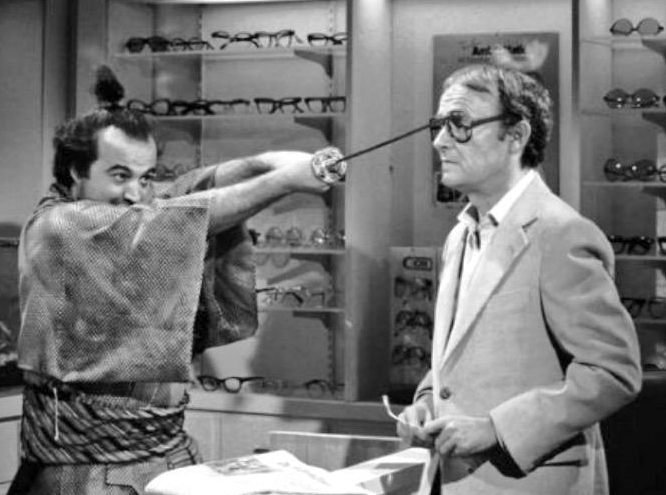
John Belushi would have made an excellent neuropathologist!

(Rated SG for Slightly Gross)

Do you remember Friday afternoons when you were a kid in school? The teacher’s voice would drone on and on. The minute hand on the wall clock would move slower and slower. Time would freeze.

You kept staring out the window, at the shining sun, at the park at the end of the block. You couldn’t wait to get outside and play some ball. Or snow was on the other side of the glass — and you were looking forward to an evening with friends at Alpine Mountain to practice some downhill ski runs. In any case, it sure was rough waiting those last few minutes.

No matter how bad you thought you had it on those long-past Friday afternoons, you most likely have nothing to compare to my Fridays in the early 1980s when I was a Resident in Pathology at a teaching hospital just outside Chicago. Because every Friday, at precisely 3:30, was brain-cutting time! 

No, that’s not a clever nickname for some devilish oral Q and A the attendings would throw at us, nor was it a dastardly written exam. On Friday afternoons we would literally slice our way through the previous week’s autopsy brains.

I’ve written about autopsies before. But not the secret of brain-cutting. A brain removed at autopsy is a squishy mess. It’s the consistency of that disgusting lemon Jello mold that has been sitting under the hot sun since 11 am at your 4th of July picnic. Trying to examine it fresh is brain salad surgery.

So to prevent brain meltdown at autopsy, the fresh brain is carefully dissected from the cranial cavity (we won’t discuss how you open that up,) wrapped in gauze, and suspended on a network of strings in a large bucket of formalin for at least a week. Put THAT on your bucket list.

But eventually, we had to look at those brains.  So every Friday afternoons Dr. D, our visiting samurai neuropathologist, would join the residents in the autopsy suite. One by one the brains from the previous week’s post-mortems, now solid enough to be cut, would be set before him. Though each had been soaking in running water for several hours in preparation for his attention, the formalin odor was still overpowering to the assembled residents. But the miasma didn’t seem to bother the Master.

Brandishing a long, glistening, and oh-so-sharp two-foot-long stainless steel knife he would approach each brain and go chop-chop-chop. He would then bow slightly and present us with thin slices of sashimied brain laid out in precise rows on a cafeteria tray. With the tip of his blade, he would point out the abnormalities–the tumors, the infarcts, the paleness of the substantia nigra in Parkinson’s Disease. He guided me through the pink blush of increased vessels in Moyamoya Disease, a rare vascular disease whose name — “puff of smoke” in Japanese —  memorialized the appearance of increased blood vessels in an angiogram.

Dr. D had seen it all and explained it all.

Our residents may not have been happy to be in that autopsy suite late on a Friday afternoon. Maybe the good neuropathologist didn’t want to be there either. So many other places we all could have been. But no matter how much we hated it, we learned our neuropathology — at the point of a sword.

But it is a shame that I never did learn how to ski!


Use your very functional brain–VOTE!


Like what you read here? Add your name to our subscription list below. No spam, I promise!
___

#mc_embed_signup{background:#fff; clear:left; font:14px Helvetica,Arial,sans-serif; }
/* Add your own MailChimp form style overrides in your site stylesheet or in this style block.
We recommend moving this block and the preceding CSS link to the HEAD of your HTML file. */

Subscribe to our mailing list

* indicates required
Email Address *

First Name
Last Name

//s3.amazonaws.com/downloads.mailchimp.com/js/mc-validate.js(function($) {window.fnames = new Array(); window.ftypes = new Array();fnames[0]=’EMAIL’;ftypes[0]=’email’;fnames[1]=’FNAME’;ftypes[1]=’text’;fnames[2]=’LNAME’;ftypes[2]=’text’;}(jQuery));var $mcj = jQuery.noConflict(true);

———————————–

Quantum Microbiology–Things Get Interesting When They Get Small

pcrEverything is getting smaller. Google has announced that it has created a quantum computer, the Holy Grail of techies. While the computer itself is a massive energy suck, the computational power is lodged in subatomic particles. I don’t understand the science, but I know those subatomic particles must be pretty, pretty, pretty small.

In the lab, we are shrinking things down too. Acting on the theory that nothing stays the same, here at UroPartners Laboratory we are embarking on a fantastic journey into the miniature world of DNA analysis.  We will be adopting a technique known as polymerase chain reaction (PCR) to help us solve the riddle of chronic urinary tract infections.

Why are we doing this? Urinary tract infections (UTIs) cause irritating symptoms and can lead to very significant complications such as sepsis (bloodstream infection,) with lots of Emergency Room visits and hospitalizations. Serious, painful, and costly. We have traditionally made the diagnosis of UTI by bacterial culture; taking a urine sample, spreading it out on a Petri dish covered with agar, sticking the plate in an incubator, and checking the next morning to see if anything has grown. Then comes the process of identifying the growth (disease-causing bacteria? yeast? contamination?) and checking what antibiotics can stop the growth.

It can be a two to three-day process, and it is not perfect. Some bugs don’t want to grow on our little Petri dishes or they may take too long to show up. We do our best, but we know there are many patients who are left without an answer and suffer long-term disease or unsettling complications.

So we are turning to PCR. Our lab will soon be able to examine a urine specimen and in a few hours identify the DNA signatures of the various bugs present. We will also identify the genes that cause the bugs to be resistant to various antibiotics. Better information in a shorter time. A definite win-win.

Like all new technology, PCR for microbiology isn’t cheap. But studies have shown the overall cost to the healthcare system is lowered by eliminating all those ER visits and hospital admissions. And we don’t plan to use the test in all cases, just the problematic ones.

We have to do some construction to create a “clean space” where the DNA in each specimen can be kept isolated from other specimens, so it will be a few months before we get started. But it’s always exciting to start something new. And a hoot for this old dog to learn a few new tricks.


The opinions above are those of the author and not of UroPartners LLC.


Like what you read here? Add your name to our subscription list below. No spam, I promise!
___

#mc_embed_signup{background:#fff; clear:left; font:14px Helvetica,Arial,sans-serif; }
/* Add your own MailChimp form style overrides in your site stylesheet or in this style block.
We recommend moving this block and the preceding CSS link to the HEAD of your HTML file. */

Subscribe to our mailing list

* indicates required
Email Address *

First Name
Last Name

//s3.amazonaws.com/downloads.mailchimp.com/js/mc-validate.js(function($) {window.fnames = new Array(); window.ftypes = new Array();fnames[0]=’EMAIL’;ftypes[0]=’email’;fnames[1]=’FNAME’;ftypes[1]=’text’;fnames[2]=’LNAME’;ftypes[2]=’text’;}(jQuery));var $mcj = jQuery.noConflict(true);

———————————–

Did a Vegetarian Diet Cure a Prostate Cancer? I Need More Evidence.

prostate-cancer-low-and-high-grade
Microscopic appearance of less (left) and more (right) prostate cancer.

“I went on a vegetarian diet and my prostate cancer is gone!”

That was the Facebook post in a prostate cancer support group I occasionally follow. My immediate thought? Sorry, but I disagree with you. Based on the evidence you posted with that click-baity headline, I don’t think there has been a miracle cure. You posted pictures of a lab order with a diagnosis of prostate cancer. And you followed up with a picture of a pathology report (something I know a bit about) of a set of prostate biopsies from 15 months later indicating no malignancy was found. I am happy for you, I really am, but it doesn’t mean your eating habits have cured you, or that going on a vegan diet will cure other people.

A bit of background on prostate cancer. Back in the “good old days” prostate cancer was diagnosed by your internist with a good old rectal exam, or when you were being evaluated for symptoms such as an abnormal bone fracture. Most likely those were aggressive cancers, with growth often stimulated by the male hormone testosterone. Treatment consisted of surgery, or radiation, or using medicine to block the testosterone effect, or surgical removal of the source of that hormone — yes, you know what that means.

Since the advent of the PSA (prostate-specific antigen) blood test era in the 1990s (I am a believer) more prostate confined, less aggressive tumors are being identified.  And based on the patient’s age, medical status, and some “under the microscope” considerations, many men with these tumors are being offered active surveillance – no current treatment, but regular PSA check-ups and repeat biopsies every year or two. If repeat biopsies show a more angry looking tumor, treatment can be considered.

And if the repeat biopsies are negative? Does that mean cure? Nope. Prostate biopsies sample only a small fraction of the prostate gland. And repeat biopsies are never in exactly the same location as the previous biopsies. So a small tumor that was sampled on the first go-round might not be in the path of the biopsy needle 15 months later. It doesn’t mean the tumor has gone away, though the tumor most likely hasn’t significantly grown. Of course, that is great news for any patient, but it isn’t the same as a cure. Surveillance is still necessary.

Is your vegan diet good for you? Sure, there are health benefits. And perhaps removing meat from your diet has removed some factors that might stimulate tumor growth. So I would never tell you to give it up. But I believe that a vegan diet cures cancer as much as I believe another post I read on Facebook that day–the one that says a sixteen year old has invented a perfect test for cancer diagnosis. But that’s a story for another day!


The above is the opinion of the author and not UroPartners LLC.


____
Like what you read here? Add your name to our subscription list below. No spam, I promise!
___

#mc_embed_signup{background:#fff; clear:left; font:14px Helvetica,Arial,sans-serif; }
/* Add your own MailChimp form style overrides in your site stylesheet or in this style block.
We recommend moving this block and the preceding CSS link to the HEAD of your HTML file. */
Subscribe to our mailing list

* indicates required
Email Address *

First Name
Last Name

//s3.amazonaws.com/downloads.mailchimp.com/js/mc-validate.js(function($) {window.fnames = new Array(); window.ftypes = new Array();fnames[0]=’EMAIL’;ftypes[0]=’email’;fnames[1]=’FNAME’;ftypes[1]=’text’;fnames[2]=’LNAME’;ftypes[2]=’text’;}(jQuery));var $mcj = jQuery.noConflict(true);

Is Curiosity Worth Losing a Job Over? Lessons from the Jessie Smollett Affair.

The Jessie Smollett incident leads to multiple firings.

The news stories and TV broadcasts say “Northwestern Medical Center fires dozens of employees for seeking to access Jessie Smollett’s health care record.” What’s that all about?

Medical records are meant to be confidential. Every doctor, dentist, mental health professional and more have you sign a form outlining the organization’s policy on privacy and how the organization complies with HIPAA, the Health Insurance Portability and Accountability Act. You may not read the form, but I bet it tells you that employees will not look at your information without needing to for medical reasons and that no one will release that information to any outside agency that doesn’t have a need to know. And we all hope everyone follows those rules.

How do health care organizations enforce HIPAA? Lots of education is a start. In our group of 60 physicians plus a few hundred ancillary employees, everyone must take an online course on patient privacy on a yearly basis. It can be a bore and a chore, but it hits home the message–patient information is personal and private. And since almost all health care in the US is now documented electronically all those electronic health records have security features, passwords, lock-outs, and time outs. If you look where you shouldn’t, you are going to leave a thumbprint.

I take the regulations seriously. Barb and I are of an age where many of our friends and neighbors have urologic conditions that lead to biopsies. These frequently cross my microscope. Other friends will call me with a question or a need to vent.  Barb knows of none of this. Unless the acquaintance says to me “It’s ok to tell Barb,” I keep my mouth shut. And in some cases, it is a secret I have kept for a dozen years or more. And the medical professionals I know all follow the same philosophy–some even like to brag about it.

So what went on at Northwestern? I can only speculate. I am sure the employees have been trained on a regular basis. At a high recognition institution like Northwestern that probably has its share of celebrities as patients/clients, I cannot imagine it can be any other way. And this incident proves that electronic safeguards are in place, identifying all the employees who tried to take a peek.

What made those dozens do it? Curiosity? The opportunity to sell the information for a big payoff? Requests from friends who wanted to be “in the know”? Or maybe, as some of the let go employees claim, Northwestern made a mistake.

Whatever the truth, this story is a reminder to health care workers, more powerful than Powerpoints and online courses, that what happens in the doctor’s office stays in the doctor’s office. At least that’s the way it supposed to be!


The above is the opinion of the author and does not necessarily reflect the opinions of UroPartners LLC.


____
Like what you read here? Add your name to our subscription list below. No spam, I promise!
___


#mc_embed_signup{background:#fff; clear:left; font:14px Helvetica,Arial,sans-serif; }
/* Add your own MailChimp form style overrides in your site stylesheet or in this style block.
We recommend moving this block and the preceding CSS link to the HEAD of your HTML file. */

Subscribe to our mailing list

* indicates required
Email Address *

First Name
Last Name


//s3.amazonaws.com/downloads.mailchimp.com/js/mc-validate.js(function($) {window.fnames = new Array(); window.ftypes = new Array();fnames[0]=’EMAIL’;ftypes[0]=’email’;fnames[1]=’FNAME’;ftypes[1]=’text’;fnames[2]=’LNAME’;ftypes[2]=’text’;}(jQuery));var $mcj = jQuery.noConflict(true);

The Pathologist and the Pea

slide-tray
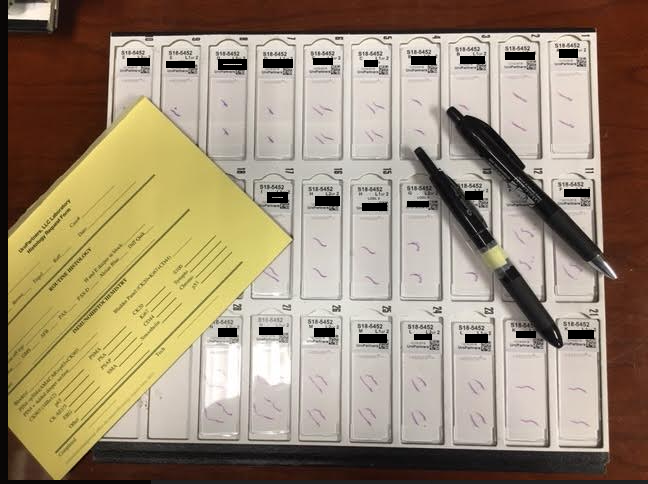
A tray of slides that may demonstrate prostate cancer under the microscope.

You all remember the story of the Princess and the Pea. In the fairy tale, a beautiful young woman of questionable parentage is proven to be royalty when a pea at the bottom of a stack of mattresses disturbs her enough to prevent her from sleeping. (I know, they had weird tests for royalty back before 23andMe made it simple.) Hans Christian Anderson wrote one version, and a young Carol Burnett starred in a Broadway adaptation called Once Upon a Mattress.

As you may have surmised, I have NO royal blood. I usually sleep through the night like a petrified log. You could put a dozen squawking chickens under my mattress and I wouldn’t budge until my alarm clock chirped at 5:05.  But at the lab, something smaller than a pea can cause me immense discomfort.

Looking at slides through a microscope for at least 3 or 4 hours a day takes concentration and good equipment. An ergonomic microscope, an equally ergonomic chair, my assortment of favorite pens and markers, and most importantly, well made and expertly stained tissue slides are all I need. And that is exactly what I get most of the time. But all it takes is a speck, be it dirt, paraffin wax, or mounting medium, on the back of a slide to throw me thoroughly out of whack.

Diagnosing prostate cancer is, of course, a science. A small bit of the knowledge is picked up in medical school, more in a pathology residency, and much more in a fellowship or certification training. But as I have learned through years in practice, it is the art of pathology that is the secret to managing a pile of slides with its stack of requisitions. Sure, there are cases where the tumor practically jumps off the slides and writes itself onto the Final Pathology Report. Those are important to diagnose and doing so is essential to the well being of the patient. But they offer little intellectual challenge for the pathologist.

The artistry is in the less obvious cases. Your eyes look through the microscope at the slide, and there are benign glands and stroma, the normal structures you expect to see. But with that first look, some primal scream tells you there is a disturbance in The Force. Something is out of alignment, there is trouble ahead. The abnormality may not show up on that first slide, but extraordinarily careful examination of each millimeter of the patient’s multiple biopsy cores is called for.

Could what appear to be benign inflammatory cells in actuality be small cell cancer? Are those bland, pale cells fading into the background a clear cell variant of prostatic adenocarcinoma? Has a bladder cancer sneaked into the prostate while I was looking the other way? An associate once told me he could “smell” cervical cancer on a pap smear two seconds after starting to look at a slide. I know that he too was talking about a ripple in The Force, some subtle change that he only recognized after looking at tens and hundreds of thousands of slides.

Going back to the tiny speck of wax or mounting medium stuck to the bottom of my slide. That tiny speck is just enough to throw the slide off balance on the microscope stage. All of a sudden the slide and I are both out of focus. The subtle, subconscious clues disappear. I am back to being a first-year pathology resident, looking for the obvious, seeing only what bites me in the behind on my comfortable, ergonomic chair.

It’s enough to make me feel like Carol Burnett with that blasted pea under her mattress. Broadway here I come!


Best Comments on Tuesday’s Post:

“If you host, I’ll watch!” – Lu Leach

“You are smart enough for jeopardy, classy enough for the Oscars but way too intelligent to get involved with show business!”– Jimmy Nuzzo


The opinions expressed are those of the author, not of UroPartners LLC.


Like what you read here? Add your name to our subscription list below. No spam, I promise!
___


#mc_embed_signup{background:#fff; clear:left; font:14px Helvetica,Arial,sans-serif; }
/* Add your own MailChimp form style overrides in your site stylesheet or in this style block.
We recommend moving this block and the preceding CSS link to the HEAD of your HTML file. */

Subscribe to our mailing list

* indicates required
Email Address *

First Name
Last Name


//s3.amazonaws.com/downloads.mailchimp.com/js/mc-validate.js(function($) {window.fnames = new Array(); window.ftypes = new Array();fnames[0]=’EMAIL’;ftypes[0]=’email’;fnames[1]=’FNAME’;ftypes[1]=’text’;fnames[2]=’LNAME’;ftypes[2]=’text’;}(jQuery));var $mcj = jQuery.noConflict(true);

Who Gets Prostate Cancer? It Could Be You Or Someone You Love

prostate-group
Ben Stiller, Colin Powell, Robert DeNiro, Harry Belafonte, my Dad, John Kerry, Roger Moore, Mandy Patinkin, and Frank Zappa have all been afflicted by prostate cancer.

Who gets prostate cancer?

Comedy stars get prostate cancer.
Generals get prostate cancer.
Good Fellas get prostate cancer.
Singers get prostate cancer.
Presidential candidates get prostate cancer.
James Bond gets prostate cancer.
Broadway stars get prostate cancer.
Mothers of Invention get prostate cancer.
My dad got prostate cancer.

The famous and the powerful. The funny and the musical. Somebodies husband or father. All can be struck with the disease that will affect 1 out of 9 American men in their lifetime. For men, prostate cancer is 2nd only to lung cancer for cancer deaths. It took my father, and it will always be a risk for me.

So every year I run the run, raise as much money as I can, and give support to the SEA Blue Chicago Prostate Cancer Annual Walk and Run, Us Too International’s annual Chicago fundraising event. SEA stands for Support, Education, and Advocacy. These needs stand shoulder to shoulder with the need for research into prevention, early detection, and improved therapeutic options for prostate cancer.

Most men screened for prostate cancer will not have prostate cancer. Some of the men with prostate cancer will not need treatment for many years. Many, many, men will survive their prostate cancer.

But I know it can be a deadly disease. I lost my dad to prostate cancer, and in his honor, I will run September 9th in Lincoln Park. Won’t you help me remember him, or honor someone you have loved? Please click here to make a donation. Every dollar is appreciated. Every dollar can help make a difference.

____
Like what you read here? Add your name to our subscription list below. No spam, I promise!
___

#mc_embed_signup{background:#fff; clear:left; font:14px Helvetica,Arial,sans-serif; }
/* Add your own MailChimp form style overrides in your site stylesheet or in this style block.
We recommend moving this block and the preceding CSS link to the HEAD of your HTML file. */

Subscribe to our mailing list

* indicates required
Email Address *

First Name
Last Name

//s3.amazonaws.com/downloads.mailchimp.com/js/mc-validate.js(function($) {window.fnames = new Array(); window.ftypes = new Array();fnames[0]=’EMAIL’;ftypes[0]=’email’;fnames[1]=’FNAME’;ftypes[1]=’text’;fnames[2]=’LNAME’;ftypes[2]=’text’;}(jQuery));var $mcj = jQuery.noConflict(true);