Am I A Prostate Guru? Someone Thinks I Am!

As a 12-year-old camper in the summer of 1968, I was my cabin’s nominee for the title of Guru of Camp Chi, 3rd Session. I ran a strong campaign, with a catchy jingle based on “Strawberry Fields Forever.” Sadly I lost in a heated battle with a candidate from another cabin. As was customary way back then, I graciously conceded the election to my opponent, without asking for a vote recount. However, I never returned to Camp Chi.

I haven’t thought about being a Guru in the 53 years since then. People who weren’t alive in the 1960s may ask “What is a guru?” Webster’s has several definitions for the word, including “a personal religious teacher and spiritual guide in Hinduism,” and “a person with knowledge or expertise.” Definitely an honorable thing to be. So I was quite surprised (and quite pleased) to have that appellation given to me the other morning.

Dr. M, one of our more senior urologists had stopped by to introduce his young new associate to the corporate and laboratory team at our facility. I gave the two physicians my standard lab tour, one that I have been giving to new employees of our group for years–a little lab history, a bit of explanation of our lab processes, and some back-patting of our staff. Fifteen minutes of time, and a chance to put a nice shine on the lab’s place in the corporate hierarchy.

As the tour moved from histology to chemistry, from cytology/FISH to our new molecular studies lab, Dr. M became more and more effusive about how excellent the lab was, and how we were the glue that held the group together. I was certainly smiling behind my mask.

And then came Dr. M’s final pronouncement. “Les is the Guru of Chicago prostate pathologists.”

OK, Chicago prostate pathologists are not the biggest set of which to be Guru. The network of Chicago area pathologists who do mostly urologic pathology isn’t enormous. But between all the university medical centers, the giant private hospital systems, and a few big commercial labs in the area, there are a lot of great pathologists and lots of prostate biopsies being analyzed. But yes, I probably see more prostate biopsies than anyone else in the metro areas — 18,000 prostate cases seen under my microscope over the last 15 years would be my best guess.

But I think Dr. M’s comment about “Guruness” was meant as more than just a comment on the number of cases I have seen through the years. I hope he was summing up that along with my associates, I have helped our large urology group provide sterling health care to our patients throughout Chicagoland. That is certainly our goal, and it’s good to know the lab is appreciated.

And after more than 50 years, I am proud to say I am finally a Guru. But I still don’t think I am ever going back to Camp Chi!


The opinions above are those of the author and not necessarily UroPartners LLC.


Like what you read here? Add your name to our subscription list below. No spam, I promise! ___

#mc_embed_signup{background:#fff; clear:left; font:14px Helvetica,Arial,sans-serif; }
/* Add your own MailChimp form style overrides in your site stylesheet or in this style block.
We recommend moving this block and the preceding CSS link to the HEAD of your HTML file. */

Subscribe to our mailing list

* indicates required
Email Address *
First Name
Last Name
//s3.amazonaws.com/downloads.mailchimp.com/js/mc-validate.js(function($) {window.fnames = new Array(); window.ftypes = new Array();fnames[0]=’EMAIL’;ftypes[0]=’email’;fnames[1]=’FNAME’;ftypes[1]=’text’;fnames[2]=’LNAME’;ftypes[2]=’text’;}(jQuery));var $mcj = jQuery.noConflict(true); ———————————–

“Friends” Don’t Let Friends Skip Their Prostate-Specific Antigen (PSA) Test

There has been plenty of talk about the reunion of the Friends cast earlier this month. Maybe you were a fan of the show during its original run and wanted to see how the actors had aged, or maybe you discovered it online and wanted to see something new. In any case, it was good to see your friends hale and hearty.

But then news broke this week that James Michael Tyler has advanced (Stage 4) prostate cancer. You may remember that Mr. Tyler played Gunther, the Central Perk manager who appeared in more episodes of Friends than anyone other than the Big Six. Call him The Magnificent Seventh.

So as I do anytime the chance arises, I remind you, or your partner, or your father, brother, uncle, our second-cousin-twice-removed to please get screened for prostate cancer (PCa). PCa is by far the most common cancer diagnosed in men in the USA, and the second leading cause of male cancer death.

The Prostate Specific Antigen blood test is still the most common test used in prostate cancer screening. It isn’t perfect, there are false positives and false negatives, but it is inexpensive, readily available, and when used intelligently to guide the patient-physician relationship it is useful in alerting to the possibility of prostate cancer. And there are lots of other associated lab tests such as Free PSA and Prostate Health Index (PHI) that can help make blood testing more specific.

Suppose you and your doctor decide a diagnostic biopsy is needed. There are techniques now that greatly reduce post-biopsy infection, once the biggest risk of the biopsy procedure. MRI studies can increase accuracy by pointing out suspicious areas to sample. And pathologists are great at making the correct diagnosis.

And if you wind up told you have prostate cancer? Treatment options abound – including no treatment in certain situations. And as in other cancers, the ability to test your DNA for abnormalities in both your cancer cells and in your non-cancer cells have lead to new treatment paradigms as well as assessment of the risk of prostate cancer in other family members.

If you are Black, your risk for prostate cancer death is even higher. US Too, the Chicago-based organization fighting prostate cancer (I am on the Board of Directors) has launched The Black Men’s Prostate Cancer Initiative. Check it out.

To all my friends with prostate cancer (and there are many) keep fighting the good fight. To the rest of you, black, white, or brown, with a family history of prostate cancer or without one, get screened.

Mr. Tyler, thank you for this opportunity for me to speak out once again. I wish you the best, and know that you have lots and lots of Friends!


The above is the opinion of the author and not necessarily UroPartners LLC or US Too.


Like what you read here? Add your name to our subscription list below. No spam, I promise!


Subscribe to our mailing list

* indicates required Email Address * First Name Last Name


Has There Been a Pathologist in YOUR Life?

Tools of the trade.

There are about 21,000 pathologists in the USA. That’s not a lot. And we are a pretty quiet bunch, even though some of us blog, a few of us tweet, and a handful probably Tik Tok and Instagram. Quincy M.E. may have been our show but that ended close to 40 years ago, Jack Klugman himself met his maker early in the last decade.

Yet pathologists matter! We make the diagnoses on the biopsies that influence your treatment. We ensure quality in the numbers that tell how well your diabetes medication is working. We make sure your Covid-19 test is as accurate as current science can provide. We study the genetics of your tumor to predict its aggressiveness or the likelihood of passing it to your children. And we can be the final arbiter of how and why a loved one died.

Whether by nature or whether by circumstances, we are mostly behind the scenes. Unlike your heart surgeon, your internist, or even your urologist, you rarely get to choose your own pathologist. And even less often do you rave about us to your neighbors. “You need a CBC? Your really should get it done at Midtown Clinic–that Dr. Greene is a great pathologist.”

But are there some of you who have known of a pathologist and of the role they played in your healthcare? Maybe it was at a tumor board you attended. Maybe you went out of your way to review your slides with the doctor who read them. Maybe you called with a question about your Prostate Specific Antigen (PSA) blood test.

If any of the above pertains to you, I’d like to know about it. Leave a comment, or drop me a line at les.raff@post.com. Let me know about any pathologists who stood out, who gave you knowledge, who made you feel cared for.

Please share, retweet, or forward this post, especially to those you know who have had an interaction with the healthcare system. I’d like to collect your stories for a future blog, or maybe more.

In the meantime, be well!

The opinions expressed above are those of the author and not UroPartners, LLC.


Like what you read here? Add your name to our subscription list below. No spam, I promise! ___

#mc_embed_signup{background:#fff; clear:left; font:14px Helvetica,Arial,sans-serif; }
/* Add your own MailChimp form style overrides in your site stylesheet or in this style block.
We recommend moving this block and the preceding CSS link to the HEAD of your HTML file. */
Subscribe to our mailing list

* indicates required
Email Address *
First Name
Last Name
//s3.amazonaws.com/downloads.mailchimp.com/js/mc-validate.js(function($) {window.fnames = new Array(); window.ftypes = new Array();fnames[0]=’EMAIL’;ftypes[0]=’email’;fnames[1]=’FNAME’;ftypes[1]=’text’;fnames[2]=’LNAME’;ftypes[2]=’text’;}(jQuery));var $mcj = jQuery.noConflict(true); ———————————–

Of Partners and Memories

My partner died a few weeks ago. Let me clarify, he was a former professional partner, not a personal one. Dave and I spent almost 20 years working side-by-side, or at least office-by-office, part of a threesome in the Pathology Department of HFMC. He welcomed me in when I first started as a very green, eager but naive first-time pathologist. He showed me the ropes, warned me of the pitfalls, and boosted my confidence.

Dave was an Assyrian, of Iranian descent, with the somewhat cosmopolitan air of someone who had spent part of his life in Paris. His position at HFMC was engineered by his cousin, a busy surgeon at the hospital. The place wasn’t the biggest Med Center in the neighborhood and didn’t have the reputation of being the best, but had a loyal core of supportive physicians and satisfied patients. Dave fit into that culture well, and by the time I joined the staff, he was friends with everyone, quick to share a personal joke, a friendly slap on the back, or an obscure memory.

Dave and I frequently strolled the hospital halls together, heading to lunch, or the surgical suite for intra-operative consultations. Every afternoon found time for case review at our multi-headed microscope. With all that togetherness, the medical staff lumped the two of us into one, and we garnered the nickname of The Tweens–someone’s mispronunciation of the word twins.

Dave’s connection with Dr. S, our department chairman, was a less collegial one. Dave never felt the professional relationship with S matched what had lured him to HFMC, and never really fully trusted S. It was only following S’s sudden death that Dave and I both became financial partners in what became our 2 man group. That small group was quickly swallowed up by a large university practice following a hospital coup-d’etat. We were welcomed in as partners, though Dave, ever more cynical than I, whispered to me that our termination was always right around the corner. Ten years later, three years after his own retirement, Dave was proven correct.

Dave was diagnosed with prostate cancer 10 years ago. He gave me the honor of reviewing his pathology slides to confirm the diagnoses, which I sadly did. Dave and Dawn, the love of his life, relocated to Florida, where we visited them twice over the next few years. A few months ago he emailed to tell me he was beginning hospice care, and that he was entering a final phase. Just last week, right after we had sent our annual holiday card to Dave and Dawn, we discovered the obituary.

One of my favorite movie quotes is from The Maltese Falcon–hard-boiled detective Sam Spade discussing the killing of his partner “When a man’s partner is killed, he’s supposed to do something about it.” Dave, you were my partner, but all I can do I can do is write and remember. Your tween will miss you.


Like what you read here? Add your name to our subscription list below. No spam, I promise!
___

#mc_embed_signup{background:#fff; clear:left; font:14px Helvetica,Arial,sans-serif; }
/* Add your own MailChimp form style overrides in your site stylesheet or in this style block.
We recommend moving this block and the preceding CSS link to the HEAD of your HTML file. */
Subscribe to our mailing list

* indicates required
Email Address *

First Name
Last Name

//s3.amazonaws.com/downloads.mailchimp.com/js/mc-validate.js(function($) {window.fnames = new Array(); window.ftypes = new Array();fnames[0]=’EMAIL’;ftypes[0]=’email’;fnames[1]=’FNAME’;ftypes[1]=’text’;fnames[2]=’LNAME’;ftypes[2]=’text’;}(jQuery));var $mcj = jQuery.noConflict(true);

———————————–


Knives, A Puff Of Smoke, and Me. What Could Go Wrong?

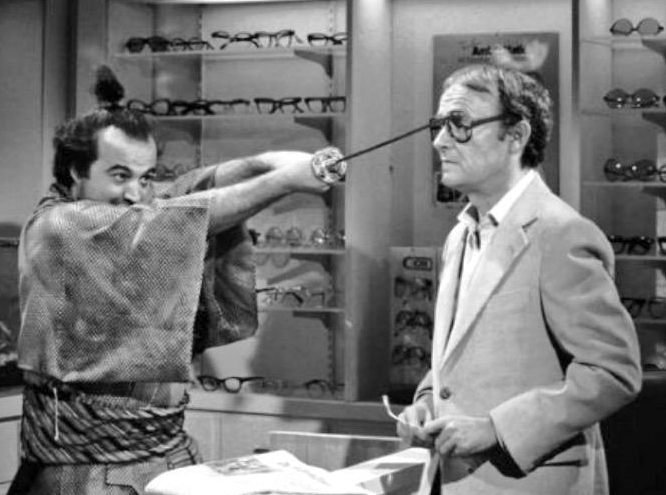
John Belushi would have made an excellent neuropathologist!

(Rated SG for Slightly Gross)

Do you remember Friday afternoons when you were a kid in school? The teacher’s voice would drone on and on. The minute hand on the wall clock would move slower and slower. Time would freeze.

You kept staring out the window, at the shining sun, at the park at the end of the block. You couldn’t wait to get outside and play some ball. Or snow was on the other side of the glass — and you were looking forward to an evening with friends at Alpine Mountain to practice some downhill ski runs. In any case, it sure was rough waiting those last few minutes.

No matter how bad you thought you had it on those long-past Friday afternoons, you most likely have nothing to compare to my Fridays in the early 1980s when I was a Resident in Pathology at a teaching hospital just outside Chicago. Because every Friday, at precisely 3:30, was brain-cutting time! 

No, that’s not a clever nickname for some devilish oral Q and A the attendings would throw at us, nor was it a dastardly written exam. On Friday afternoons we would literally slice our way through the previous week’s autopsy brains.

I’ve written about autopsies before. But not the secret of brain-cutting. A brain removed at autopsy is a squishy mess. It’s the consistency of that disgusting lemon Jello mold that has been sitting under the hot sun since 11 am at your 4th of July picnic. Trying to examine it fresh is brain salad surgery.

So to prevent brain meltdown at autopsy, the fresh brain is carefully dissected from the cranial cavity (we won’t discuss how you open that up,) wrapped in gauze, and suspended on a network of strings in a large bucket of formalin for at least a week. Put THAT on your bucket list.

But eventually, we had to look at those brains.  So every Friday afternoons Dr. D, our visiting samurai neuropathologist, would join the residents in the autopsy suite. One by one the brains from the previous week’s post-mortems, now solid enough to be cut, would be set before him. Though each had been soaking in running water for several hours in preparation for his attention, the formalin odor was still overpowering to the assembled residents. But the miasma didn’t seem to bother the Master.

Brandishing a long, glistening, and oh-so-sharp two-foot-long stainless steel knife he would approach each brain and go chop-chop-chop. He would then bow slightly and present us with thin slices of sashimied brain laid out in precise rows on a cafeteria tray. With the tip of his blade, he would point out the abnormalities–the tumors, the infarcts, the paleness of the substantia nigra in Parkinson’s Disease. He guided me through the pink blush of increased vessels in Moyamoya Disease, a rare vascular disease whose name — “puff of smoke” in Japanese —  memorialized the appearance of increased blood vessels in an angiogram.

Dr. D had seen it all and explained it all.

Our residents may not have been happy to be in that autopsy suite late on a Friday afternoon. Maybe the good neuropathologist didn’t want to be there either. So many other places we all could have been. But no matter how much we hated it, we learned our neuropathology — at the point of a sword.

But it is a shame that I never did learn how to ski!


Use your very functional brain–VOTE!


Like what you read here? Add your name to our subscription list below. No spam, I promise!
___

#mc_embed_signup{background:#fff; clear:left; font:14px Helvetica,Arial,sans-serif; }
/* Add your own MailChimp form style overrides in your site stylesheet or in this style block.
We recommend moving this block and the preceding CSS link to the HEAD of your HTML file. */

Subscribe to our mailing list

* indicates required
Email Address *

First Name
Last Name

//s3.amazonaws.com/downloads.mailchimp.com/js/mc-validate.js(function($) {window.fnames = new Array(); window.ftypes = new Array();fnames[0]=’EMAIL’;ftypes[0]=’email’;fnames[1]=’FNAME’;ftypes[1]=’text’;fnames[2]=’LNAME’;ftypes[2]=’text’;}(jQuery));var $mcj = jQuery.noConflict(true);

———————————–

The Pathologist and the Pea

slide-tray
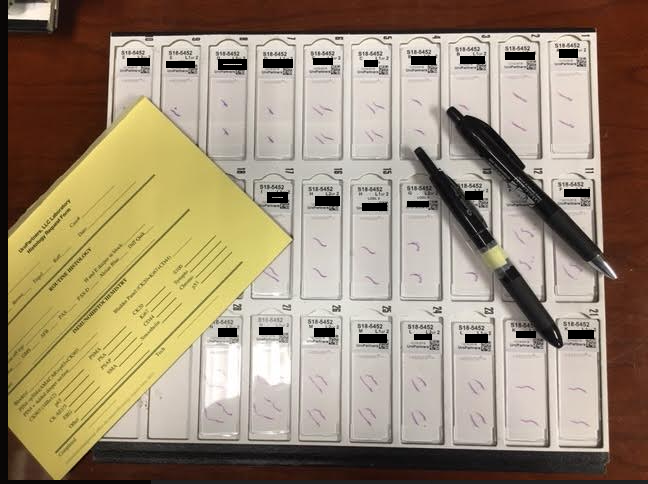
A tray of slides that may demonstrate prostate cancer under the microscope.

You all remember the story of the Princess and the Pea. In the fairy tale, a beautiful young woman of questionable parentage is proven to be royalty when a pea at the bottom of a stack of mattresses disturbs her enough to prevent her from sleeping. (I know, they had weird tests for royalty back before 23andMe made it simple.) Hans Christian Anderson wrote one version, and a young Carol Burnett starred in a Broadway adaptation called Once Upon a Mattress.

As you may have surmised, I have NO royal blood. I usually sleep through the night like a petrified log. You could put a dozen squawking chickens under my mattress and I wouldn’t budge until my alarm clock chirped at 5:05.  But at the lab, something smaller than a pea can cause me immense discomfort.

Looking at slides through a microscope for at least 3 or 4 hours a day takes concentration and good equipment. An ergonomic microscope, an equally ergonomic chair, my assortment of favorite pens and markers, and most importantly, well made and expertly stained tissue slides are all I need. And that is exactly what I get most of the time. But all it takes is a speck, be it dirt, paraffin wax, or mounting medium, on the back of a slide to throw me thoroughly out of whack.

Diagnosing prostate cancer is, of course, a science. A small bit of the knowledge is picked up in medical school, more in a pathology residency, and much more in a fellowship or certification training. But as I have learned through years in practice, it is the art of pathology that is the secret to managing a pile of slides with its stack of requisitions. Sure, there are cases where the tumor practically jumps off the slides and writes itself onto the Final Pathology Report. Those are important to diagnose and doing so is essential to the well being of the patient. But they offer little intellectual challenge for the pathologist.

The artistry is in the less obvious cases. Your eyes look through the microscope at the slide, and there are benign glands and stroma, the normal structures you expect to see. But with that first look, some primal scream tells you there is a disturbance in The Force. Something is out of alignment, there is trouble ahead. The abnormality may not show up on that first slide, but extraordinarily careful examination of each millimeter of the patient’s multiple biopsy cores is called for.

Could what appear to be benign inflammatory cells in actuality be small cell cancer? Are those bland, pale cells fading into the background a clear cell variant of prostatic adenocarcinoma? Has a bladder cancer sneaked into the prostate while I was looking the other way? An associate once told me he could “smell” cervical cancer on a pap smear two seconds after starting to look at a slide. I know that he too was talking about a ripple in The Force, some subtle change that he only recognized after looking at tens and hundreds of thousands of slides.

Going back to the tiny speck of wax or mounting medium stuck to the bottom of my slide. That tiny speck is just enough to throw the slide off balance on the microscope stage. All of a sudden the slide and I are both out of focus. The subtle, subconscious clues disappear. I am back to being a first-year pathology resident, looking for the obvious, seeing only what bites me in the behind on my comfortable, ergonomic chair.

It’s enough to make me feel like Carol Burnett with that blasted pea under her mattress. Broadway here I come!


Best Comments on Tuesday’s Post:

“If you host, I’ll watch!” – Lu Leach

“You are smart enough for jeopardy, classy enough for the Oscars but way too intelligent to get involved with show business!”– Jimmy Nuzzo


The opinions expressed are those of the author, not of UroPartners LLC.


Like what you read here? Add your name to our subscription list below. No spam, I promise!
___


#mc_embed_signup{background:#fff; clear:left; font:14px Helvetica,Arial,sans-serif; }
/* Add your own MailChimp form style overrides in your site stylesheet or in this style block.
We recommend moving this block and the preceding CSS link to the HEAD of your HTML file. */

Subscribe to our mailing list

* indicates required
Email Address *

First Name
Last Name


//s3.amazonaws.com/downloads.mailchimp.com/js/mc-validate.js(function($) {window.fnames = new Array(); window.ftypes = new Array();fnames[0]=’EMAIL’;ftypes[0]=’email’;fnames[1]=’FNAME’;ftypes[1]=’text’;fnames[2]=’LNAME’;ftypes[2]=’text’;}(jQuery));var $mcj = jQuery.noConflict(true);

Don’t Be Afraid to Call Your Pathologist. It Might Make Both of You Happy!

phone
Call your pathologist!

“Mr. Michaelis wants you to call him,” said KB, my administrative manager.

“Who is Mr. Michaelis?” I asked.

“He is a patient. He wants to talk to you about a report that…”

At this point, most pathologists complexion changes to a deathly pallor. Their heart starts sprinting, a line of sweat breaks out on their upper lip and tremors extend from their shoulders to their fingertips. Four years of residency, a couple of years in a fellowship, an office in a dark office at the end of a faded linoleum-lined corridor, all so that they will never hear the words “a patient wants to talk to you.” We have made ourselves the “doctor’s doctor,” not the patient’s doctor.

For the most part, it is a successful maneuver. There aren’t many patients, or families of patients, who think of calling the pathologist when they don’t understand a Surgical Pathology report, or need an explanation of a Prolaris® or Oncotype Dx® test on a malignant prostate biopsy.

And that is OK. As pathologists, we send our blood test results or biopsy report out to the treating physician, and they do the heavy lifting with the patient. It makes sense since usually those providers have the best handle on what is going on with their patients and can best fit the test results into the entire health picture. But these days, with the advent of the (much hated) Electronic Medical Record, we pathologists, way off down the hall, can get a pretty good idea of what is going on with a patient’s medical care.

I will let you in on a secret. Despite my being an otherwise typical, pocket-protector toting, smeared glasses wearing pathologist, I enjoy talking with patients. I don’t mind explaining what I have seen under the microscope or what a particular change in blood PSA levels means. I try to use understandable words and remain professional, even in the face of patients who are upset with their diagnosis (or their bill) and really just want to vent.

There is one thing I tell patients upfront that I will not do, and that is advise them on their therapy. There are many choices, the evidence-based recommendations change daily, or at least monthly, and the patient’s urologist is really the place to go for proper guidance. Therefore I lay low on that issue, though when asked “Doc, what would you do if it was YOUR prostate,” I might give an answer.

So I listened without shivering as KB told me what Mr. Michaelis was upset about. I did a quick check of his report and of the Electronic Medical Record, and recognized he had a very good question about a blood level value referenced in the biopsy report. I gave him a call, explained who I was, and told him we would issue a corrected report. We then chatted for a few minutes about about his medical condition – but not his best therapeutic choices – and chatted for even longer about the weather on a cloudless, sunny, spring afternoon.

And for a few minutes I felt like a “real” doctor again!

____

The above is the opinion of the author and not of UroPartners LLC.

____
Like what you read here? Add your name to our subscription list below. No spam, I promise!

___

#mc_embed_signup{background:#fff; clear:left; font:14px Helvetica,Arial,sans-serif; }
/* Add your own MailChimp form style overrides in your site stylesheet or in this style block.
We recommend moving this block and the preceding CSS link to the HEAD of your HTML file. */

Subscribe to our mailing list

* indicates required
Email Address *

First Name
Last Name

//s3.amazonaws.com/downloads.mailchimp.com/js/mc-validate.js(function($) {window.fnames = new Array(); window.ftypes = new Array();fnames[0]=’EMAIL’;ftypes[0]=’email’;fnames[1]=’FNAME’;ftypes[1]=’text’;fnames[2]=’LNAME’;ftypes[2]=’text’;}(jQuery));var $mcj = jQuery.noConflict(true);


Your Biopsy Lives On-What Happens After the Diagnosis is Made

blocks-in-storage
Biopsy blocks are stored for 10 years. Current regulations also require additional identifying information such as patient name.

So we have made your diagnosis. Hopefully, your biopsy was benign, but what if it was malignant? What happens next? What does a lab do with any leftover bits of your tissue?  What happens to the glass slides we looked at under the microscope to make the diagnosis? While I will use the prostate biopsies that we see in our lab as an example, much of this can be extrapolated to other biopsies, such as those from the breast, lung or colon.

Let’s talk about the “left-over” tissue first. With prostate biopsies, all the tissue is processed; that is to say that all of the biopsy material has been dehydrated, rehydrated and embedded in paraffin wax. The diagnostic slides were made from these paraffin blocks, but not all the tissue in the blocks is used up. What happens to the remainder? Sometimes nothing, but sometimes a lot. And more and more is being done with each passing year.

In cancer cases, we use that extra tissue to verify that the specimen we just made the diagnosis on is from the right patient. That’s a no-brainer you say, but we want to do everything we can to ensure that the Mr. Bowl’s cancer didn’t inadvertently get transferred to Mr. Plate’s specimens. So we work with a company that does a DNA double check. The company compares the DNA in Mr. Bowl’s biopsy core to the DNA in cells on a cotton swab that was rubbed against the inside of Mr. Bowl’s cheek when he was in the doctor’s office for the biopsy. The DNA results should be the same. It’s a high tech version of “The Match Game,” and creates a sense of confidence for patient, urologist, and pathologist.

The tissue in the paraffin block has other valuable uses. An increasing number of analyses can be done to determine the aggressiveness of the cancer, usually by using DNA testing to evaluate what genes have been altered in the tumor. There are even tests that look at benign biopsies and “predict” the likelihood of cancer being diagnosed in the next two years.

The glass slides have use as well. We can send them to another pathologist for a second opinion. They can be run through a device which creates a totally digital replica of the slide that can be viewed anywhere around the world. And they can be reevaluated as part of research studies.

How long do we retain the blocks and slides? We follow our accreditation regulations and local/federal laws and dispose of this material after 10 years. Space requirements make maintaining the material for longer than a decade prohibitive. While it would seem valuable to use this older material in research rather than dispose of it, investigation with some of our research partners has indicated the 10-year-old material has degenerated and is not suitable for the studies currently being done on newer material.

One more thing; most pathologists would be glad, and often eager, to show you your slides under the microscope. Usually a phone call is all it takes to make the arrangements. Don’t be shy, it is YOUR health!

And on a closing note–HAPPY LAB WEEK TO ALL MY LAB PARTNERS. Your pride and dedication in your work makes us an outstanding laboratory.

_____

The above is the opinion of the author and not of UroPartners, LLC.

_____

____
Like what you read here? Add your name to our subscription list below. No spam, I promise!

___

#mc_embed_signup{background:#fff; clear:left; font:14px Helvetica,Arial,sans-serif; }
/* Add your own MailChimp form style overrides in your site stylesheet or in this style block.
We recommend moving this block and the preceding CSS link to the HEAD of your HTML file. */
Subscribe to our mailing list

* indicates required
Email Address *

First Name
Last Name

//s3.amazonaws.com/downloads.mailchimp.com/js/mc-validate.js(function($) {window.fnames = new Array(); window.ftypes = new Array();fnames[0]=’EMAIL’;ftypes[0]=’email’;fnames[1]=’FNAME’;ftypes[1]=’text’;fnames[2]=’LNAME’;ftypes[2]=’text’;}(jQuery));var $mcj = jQuery.noConflict(true);

Oops We Did it Again–Another Research Paper Tells Us Pathologists Sometimes Have it Tough, This Time With Melanoma

the-big-c
Laura Linney starred as a melanoma patient in “the big C”.

I keep saying it. Pathology is hard. I know that it is convenient to believe that when your surgeon does a biopsy and “sends it to the lab,” someone you have never met will look down the tube of a microscope, make a definite diagnosis, call your doctor immediately with all the answers and then send you a bill. After all, they call us the “The Doctors Doctor.”

Unfortunately, another scientific article says life isn’t so rosy. As the study tells us (you can also read about it in the Tribune), we don’t always know all the answers. The current study looks at the diagnosis of melanoma, the potentially fatal skin cancer that has also affected my wife Barb. The lead author, Dr. Joann Elmore of the University of Washington, was spurred to do some research after conflicting diagnoses on her own skin biopsy. Working with a pathologist, she arranged for a set of microscopic slides showing a variety of pigmented skin lesions to be sent to a group of volunteer pathologists around the country for their diagnosis. A few months later, the same slides were sent out again to the same pathologists, garnering a second round of opinions.

A “reference diagnosis” on each case was obtained from three expert pathologists and this was used to measure the accuracy of the volunteer’s diagnoses. The volunteer diagnoses were also compared to their peers, and to their own conclusions from 6 months earlier. The results? Some cases were easily and consistently diagnosed as benign, some were clearly malignant. And in the middle was a big gray zone without much agreement. Maybe malignant, maybe not.

This may have come as a surprise to the author, but not to those of us in the pathology trenches.  A similar gray zone exists throughout diagnostic pathology. It is there in lesions of the breast. It is there in my field, urologic pathology. We even have a term to describe it in prostate biopsies, atypical small acinar proliferation, or ASAP. (A good rule of thumb is that the longer the diagnosis, the more uncertain the pathologist.) No matter how many sections we cut, how many special stains we do, we just can’t reach a definite diagnosis. Maybe the cells just aren’t atypical enough, or maybe there just aren’t enough nasty looking glands, for us to say the word “cancer.” One mentor’s lesson still rings in my ear–“don’t call a prostate biopsy malignant if you wouldn’t want that patient’s prostate gland in your hand the next day.” Our methods of treating prostate cancer have changed since then, with small tumors often not resulting in prostatectomy, but the mental image is still a potent one.

So what is a patient to do in an ambiguous situation? You can ask for a second opinion, but be prepared that you may not get a resolution. Ask if there are any new tests, particularly in the molecular biology spectrum, that might help make a definitive diagnosis. That field is exploding exponentially with new tests being released almost daily. Yet sometimes it may take patience, careful follow-up, or even an additional biopsy before you have an answer.

In the meantime, we pathologists try to get better, via continuing education, increasing our experience with a variety of lesions, and interaction with our experts and our peers.The goal one day is to see the headline “Pathologists Get It Right.”

_________________________

Recent Blog Follow-Ups:

IKEA provided us with a refund for the reclaimed wall units! I still begrudge them the 90 minutes on hold.

I jumped the gun with my Game of Thrones post. Now that the season 7 premier is truly upon us, read the GOT life lessons here.

_________________________

The above blog is the opinion of the author and does not reflect the opinion of UroPartners LLC .
_________________________

Like what you read here? Add your name to our subscription list below. No spam, I promise!

___

#mc_embed_signup{background:#fff; clear:left; font:14px Helvetica,Arial,sans-serif; }
/* Add your own MailChimp form style overrides in your site stylesheet or in this style block.
We recommend moving this block and the preceding CSS link to the HEAD of your HTML file. */

Subscribe to our mailing list

* indicates required
Email Address *

First Name
Last Name

//s3.amazonaws.com/downloads.mailchimp.com/js/mc-validate.js(function($) {window.fnames = new Array(); window.ftypes = new Array();fnames[0]=’EMAIL’;ftypes[0]=’email’;fnames[1]=’FNAME’;ftypes[1]=’text’;fnames[2]=’LNAME’;ftypes[2]=’text’;}(jQuery));var $mcj = jQuery.noConflict(true);

Prostate Cancer: Peaking Behind the Pathologist Screen

 OLYMPUS DIGITAL CAMERA
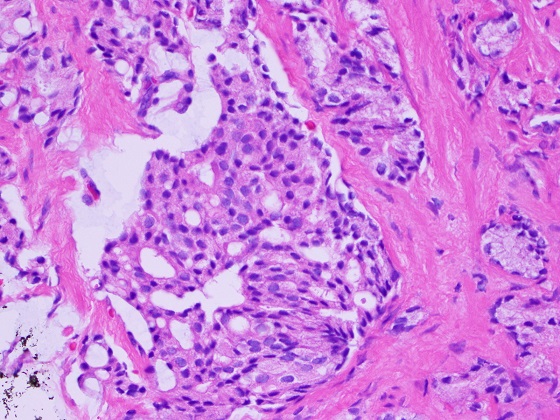
An aggressive prostate cancer.

In the past few days, two members of Chicago media, radio host  Dave Fogel and newscaster Hosea Sanders have shared that they are undergoing prostate surgery for prostate cancer. In both cases the cancers were discovered when abnormal Prostate Specific Antigen (PSA ) blood test results were followed by their doctors finding cancer on subsequent prostate biopsies.

Should every man have PSA screening. There is no universal agreement on that sticky question. I believe that men from about 50 to 75 years of age benefit from testing and careful, rationale, evaluation of abnormal results. In men with strong family histories of prostate cancer the need is even greater and may begin at a younger age. And as pointed out by Mr. Sanders, this is especially true of African-American men.

Not every abnormal result requires a biopsy, but a value abnormally high for age group, or rising steadily from previous results, needs to be evaluated. Urologists are well trained in triaging and determining when a biopsy is needed. Doesn’t this mean  some men have to endure the discomfort of a biopsy when in fact they don’t have cancer? Yes, but in our laboratory practice, and in similar ones around the country, about 50% of the men whose specimens we see do in fact have cancer.

Do all men with prostate cancer need treatment? No, prostate cancer is not aggressive in all men. A great deal of the decision whether to treat or not is based on the microscopic appearance of the tumor, usually summarized as a “Gleason Score.” And it is here that my pathology associates and I in the lab have our most pitched battles.

At our daily case review we examine on a video screen every cancer case that each of us have seen that day. Most cases are straight-forward, but applying the scoring criteria in other cases is like throwing spaghetti at the wall. Only some of it will stick. Though each of us is thoroughly trained in the “rules” for the different scores and have each examined thousands of biopsies, we also bring our subjective opinions, our natural inclinations and the whispers of our teachers and national experts. The questions we ask, “Are those glands merging or just squeezed together? Is that a glomeruloid pattern or just telescoping?” do not always have a concrete answer.

What do we do to reach a consensus? We probe, we quote books and articles, we pull out pictures, we pull out our hair. We have never reached delivering blows or cussing each other out (at least aloud), but we each work hard to support our position. On some occasions we seek input from the East Coast or West Coast gurus. The elusive answers may impact how the patient faces their future. And yes, though we are behind the scenes and we rarely meet the men in question, we think of them as our patients too. That way we know we are giving them all our best.

And just as a reminder:

Please
Screen
Annually

#mc_embed_signup{background:#fff; clear:left; font:14px Helvetica,Arial,sans-serif; }
/* Add your own MailChimp form style overrides in your site stylesheet or in this style block.
We recommend moving this block and the preceding CSS link to the HEAD of your HTML file. */

Subscribe to our mailing list

* indicates required
Email Address *

First Name
Last Name

//s3.amazonaws.com/downloads.mailchimp.com/js/mc-validate.js(function($) {window.fnames = new Array(); window.ftypes = new Array();fnames[0]=’EMAIL’;ftypes[0]=’email’;fnames[1]=’FNAME’;ftypes[1]=’text’;fnames[2]=’LNAME’;ftypes[2]=’text’;}(jQuery));var $mcj = jQuery.noConflict(true);