In Memory of Lin Brehmer and Dr. Rebecca Blank. After Every Loss We Must Fight For More Wins. Please Read To The End.

Last July, my post was centered around the newly public cancer diagnoses of Lin Brehmer and Rebecca Blank. As everyone in Chicagoland knows, Lin, our local WXRT radio legend, succumbed to prostate cancer last month. This week, we learned that Dr. Blank, the incoming President of Northwestern University, has passed away from her “aggressive” cancer, which I have seen classified as pancreatic cancer.

Sadly, my campaign for a moment of radio silence in honor of Lin fell on deaf ears. Too many readers let me know that “dead air” was the last thing a radio pro like Brehmer would have wanted. My next request will be for NU’s men’s basketball Wildcats to win a few games in the NCAA March Madness Tournament to honor the University President who never got to be. Go Cats!

Prostatic cancer and pancreatic cancer are the two diseases that took my father and my sister. Each year tens of thousands of other Americans die of these two scourges. A thimbleful of DNA gone wrong, a pinpoint of genetic material led astray, and a person’s life and sometimes lifespan is indelibly altered.

I am not an eternal pessimist. All cancer news is not negative. Progress is being made in the multi-faceted battle against the disease. The very genes whose alterations begin the malignant process are now targets for therapies that can halt or reverse the course of the disease. Surgery and radiation treatments have become more focused in an attempt to minimize patient side effects and avoid damage to surrounding tissues. In fact, better treatment along with earlier diagnoses and a decrease in smoking rates have given us a remarkable 33% drop in cancer death rates over the last 30 years.

My friends with cancer histories are fighting strong and proud. This week I bowled with a prostate cancer survivor and played tennis with a kidney cancer warrior. I aspire to play half as well and be half as optimistic as either one of them. And my dear wife is 11 years past her melanoma diagnosis and treatment. I look forward to a day when all cancer patients can celebrate the same successes.

Those of you who know me well are aware that for many years I have been involved in the SEA Blue/Zero Prostate Cancer Walk and Run for Prostate Cancer Awareness. My involvement continues this year. If you are thinking of Lin or someone in your family who has been affected by prostate cancer and want to help prostate cancer patients please support our cause by clicking this link. (Please be aware the donation process currently only works from mobile phones. It does not work on desktop computers or tablets.) Any and all donations are appreciated.

And if you are a Northwestern alum and want to recognize Dr. Blank, a memorial fund exists at the University of Wisconsin, where she served as Chancellor for nine years.

The fight goes on!

Chicago’s Best Friend In The World Has Died. Lin Brehmer, I Will Miss You.

What a week. Jeff Beck. David Crosby. And now Lin. It’s the last of those that brings me closest to tears.

I can’t describe myself as a long-time WXRT listener. Back in the day (whatever that means) I spent more time with Steve Dahl and Garry Meier on the Loop and was an early disciple of the Stroud Crowd on the Drive. But in recent years whether listening to my office boom box or streaming at home, if I wanted music with a local source, it was WXRT for Chicago’s Finest Rock. And if it was “XRT it was most likely Lin Brehmer.

Lin played the same music as the other WXRT jocks, but his personality outshined all the others. Never one for understatement, any song he liked was the greatest song ever written. And of course, he was everyone’s best friend in the whole world. Who wouldn’t want to be best friends with a Chicago legend?

For a year or two my schedule at the lab revolved around Lin. No matter what I had scheduled, or what unscheduled fires I needed to extinguish, I was sure to be in my office listening to that old radio at 6:20 in the morning for Lin and Mary Dixon to play the three snippets of songs that comprised that day’s 3 for Free contest. My only reward for the dozen times I was the first to Tweet in the right answer was having Lin say my name on the air. It was lagniappe enough.

We exchanged direct messages over a few topics. Lin took issue with an email from ‘XRT program director Laura Duncan to new jock Annalisa that I “discovered.” But at the end of our back and forth, even Lin had to admit that the station played a limited number of prescribed tunes from artists such as the Cure and The Grateful Dead. And we disagreed over a particular song by the band Guster, with the band members themselves becoming involved in our Twitter conversation. At this sad time, I concede that battle to Lin.

Lin lost his life to prostate cancer. Regular readers of this blog know of my involvement personally, professionally, and philanthropically in the fight against prostate cancer. Men of a certain age, please get screened for this potential killer, whether by PSA or one of the myriad of other tests now available. None are perfect, all are better than doing nothing,

On Lin’s Bin, our superjock gave tongue-in-cheek responses to questions submitted by listeners. Disappointingly, Lin never answered any of the questions I submitted. Lin, I have one more question for you.

Are angels your best friends in the world now?

Roll With The Changes

Keep on rollin'
Keep on rollin'
You gotta roll with the changes.

If you read this blog regularly, and I hope that you do, you have probably noticed that the most recent 2 or 3 blogs don’t resemble the past 500 or so entries. The formatting is different, the URL is different, and most importantly, the connection to ChicagoNow and the Chicago Tribune has vanished.

Several of my colleagues, as well as well-known Chicago columnist Eric Zorn, have detailed the demise the ChicagoNow at the hands of Alden Global Capital. I won’t go into details, but Alden owns the Trib; Alden apparently saw no value in the cadre of talented bloggers who provided free content to the Trib’s digital site; last week Alden unceremoniously pulled the plug.

As a result, the former ChicagoNow bloggers have all been scrambling to rescue our old blogs (most of mine can be found here) and find new places from which to continue to shout our thoughts and views. Some of us hope to band together in a new enterprise if we can come up with the technical expertise to allow us to express our common vision. I have also reached out to the Sun-Times and Daily Herald in hopes that either might consider giving us a home (no responses so far.)

For now, I am using a stand-alone WordPress platform. It’s a return to my roots. I started with WordPress in 2015 and wrote there for several months before passing the entrance exam (gentle questioning by the great Jimmy Greenfield) for ChicagoNow and being invited to join in with the gang. The site is a bit bland but I will try to pretty up the place…all with the hope that this is a temporary hiccup and I will soon be blogging with my old buddies once again.

And One More Change (with a request)…

Many of you are aware of my past association with USToo, the Chicago area organization that was heavily involved in helping patients with prostate cancer. Last year USToo merged with the national organization Zero-The End of Prostate Cancer. As an UsToo board member, I agreed with the merger knowing the power of a large national group will help make an impact in the lives of prostate cancer patients and their families.

One thing hasn’t changed. Zero is continuing the annual SEABlue Prostate Cancer Walk and Run in Lincoln Park. I participate annually to honor my dad, who lost his life to prostate cancer. Through the years, many of you have sponsored me. Some have already done so this year. If you have not and would like to, here is the link. No contribution is too small or not appreciated.

When It Hurts to Say I Told You So: Advanced Prostate Cancer Cases on the Rise

emperorDiagnose a patient’s prostate cancer in its earliest stages and you have a great chance of curing it. Starting in the early 1990’s, that was the philosophy behind Prostate Specific Antigen (PSA) blood testing in men. It wasn’t a perfect test, and many men with increased PSA proved not to have cancer when their prostates were biopsies. Some other men underwent heavy duty treatment such as prostatectomy or radiation for prostate cancers that were SO small and bland they probably would never have spread. Despite the drawbacks, the death rates from prostate cancer dropped in men who were being screened.

As I have written about before. some scientific panels, as well as CMS, the federal agency that oversees Medicare, took a dim view of PSA screening, and the number of men being screened decreased. Some men were never tested, others were still getting tested, but maybe a few years later or a little less frequently than they had been in the past. As a busy prostate pathologist this delay in testing worried me, and I never missed an opportunity to tell the men I knew to have PSA testing. I told women to nag the men they love. And I never failed to have my PSA tested as part of my annual physical

My worries soon began to become reality. My colleagues and I, examining biopsies under the microscope, began to see more cases of aggressive looking (higher Gleason Grade) prostate cancer than we had in years past.  This was what is called anecdotal findings; it was our impression, but we did not do a statistical study or a publish a peer reviewed scientific paper to state our claim and have it verified (or debunked) by other pathologists around the country.  But we wondered, was there a correlation between what we were seeing and the amount of spread of cancer in the men being diagnosed?

We now have the beginning of an answer. A study published this week from my alma mater, Northwestern University, confirms that a higher number of men are once again being diagnosed with advanced prostate cancer. By the time of diagnosis, their cancer has spread to bones or lung, making cure much more unlikely. The window of catching a small, treatable, tumor has passed. The authors do not claim this is entirely due to lack of PSA screening, but to quote the lead author, Dr. Edward Shaeffer, “If I were a patient, I would want to be vigilant. I firmly believe that PSA screening and rectal exams save lives.”

PSA isn’t perfect. We hope someday to have a better test. And, very importantly, any man diagnosed with prostate cancer needs to have a long discussion with his urologist about the best way to manage his disease. But mammas, don’t let your babies grow up to be victims. Tell them PSA’s save lives.

————————————–
You never know what you will find here. To subscribe, type your email address in the box and click the “create subscription” button. It is completely spam free, and you can opt out at any time.

Reading a Prostate Biopsy-Inside the Mind of a Pathologist

tray
One Patient’s Prostate Biopsy Slides

West Suburban Chicago

6 a.m.

“Let’s see, how many prostate cases do we have today. Looks like I get nine. Better get started now before the phones start ringing and before the lab techs start popping their heads in. And oh yeah, I will have urine cytology slides and FISH heading my way.

“Too deathly silent in here though, better turn on the radio. The Sox lost last night, so no point in listening to the Mulley and Hanley on The Score. I’ll flip to FM  and go with Lin Bremer on “XRT.  A little music and a chance at ‘Three for Free.”

“Got my tea, let’s find the first case. My case list start’s with Bobby Bright, routine 12 part biopsy. That will be one of the big trays that can hold all 24 slides. Oh, here it is, top of the stack. All the slides have their labels, and the labels match the requisition and billing sheet. Good, no issues. Flip on the microscope light, grab the first slide and we are rolling.

“Part A is from the right apex.  A few inflammatory cells, but nothing that looks suspicious for cancer. Check off the benign code on my worksheet. Part B, right middle, oh-oh. I don’t like that group of glands. Their growth pattern is too irregular. Let’s look at a higher microscopic power. Yup, there are big nucleoli, and I don’t see any basal cells. Pretty sure this is malignant, but am I sure? I think I will order a PIN4 stain. The insurance company won’t be happy paying for it, but they would be more unhappy paying for a prostatectomy the patient doesn’t need. Mr. Bright wouldn’t be too happy about any of that either. So let’s do the stain. I should have it by this afternoon in time for case review, so there won’t be any delay. Rest of the case is benign, good for this guy, he might only need active surveillance, no surgery or radiation for now. Oh, I better remember to flag this case for possible molecular testing. That will help decide the treatment question.

“There’s my microphone. I guess I forgot to turn it off last night, but it’s still charged. Good thing, I can dictate the diagnoses without having to recharge. The staff can start typing early.

“OK, next case, Grant Aspen. Wow, these glands look really stunted. And the cells are so bizarre. But that blood vessel doesn’t look right either. Hmm, I think I know what’s going on, but let me check the medical chart. So glad we have the electronic health record, it really makes my life easier. Yeah, just what I thought. This guy had prostate cancer five years ago and was treated with radiation therapy. All those freakin’ changes are from the rays. No cancer here. Let’s get this dictated and move on.

“Next case is one of those MRI-Fusion biopsies. Sometimes that MRI is really good at picking out the area in the prostate where the risk of cancer is high. That will be Part M on this case. Here it is, yeah, that’s tumor for sure. But how do I want to grade this. Is this a Gleason 3+3, or a Gleason 3+4. It’s hard to tell on this level. Good thing we have 6 levels on each biopsy. This next level definitely has poorly formed glands, so we’ve got some Gleason Grade 4 here for sure. That will make the Gleason Score a 3+4=7. And I see cancer in some of his other biopsies as well. I am afraid he is going to wind up in the OR for a robotic prostatectomy. Better dictate to flag this patient for our Quality Assurance audit. After he has his prostate out  I can check that pathology report against our biopsy report.

“Damn, there goes the fire alarm. Forgot that we are having a fire drill today. Oh well, the sun is shining and a few minutes standing around in the parking lot will help clear my mind.  Gotta keep sharp, never know what the next slide will show.”

——

You never know what you will find here. To subscribe, type your email address in the box and click the “create subscription” button. It is completely spam free, and you can opt out at any time.

Am I Cooked? Hot Tea and Other Risks

blues travelerOh I like coffee…

…and I like tea

Blues Traveler–1994

Coffee drinkers are rejoicing. A UN study shows no increased cancer risk for java juicers, no matter how many jolts of Joe you go for in a day. So until the next study comes out disputing these findings –give it a week or two–Starbucks, Dunkin’ Donuts, and McDonalds can keep your magic elixir flowing. But for me, the news was not so good.

Other than enjoying an occasional scoop of Baskin-Robbins Jamoca Almond Fudge  and a rarer slice of tiramisu, I keep away from coffee.  It isn’t the caffeine I am avoiding, I just have under-developed coffee savoring taste buds. But I revealed my little secret here a few months ago. I am a tea tippler (though not a teetotaller.) And I like it hot. Microwave my tea? You have got to be kidding. “Instant” hot water? Not a chance. I require either a steaming tea pot  on the stove or my high powered electric kettle to give me the boiling brew I crave.

And that’s the problem. The UN study points at the temperature of beverages as a risk factor for cancer. Drinks over 150° F appear to be the culprit, and here I am gulping down about 6 cups of tea a day, as close to 212° as humanly or mechanically possible. I have accepted the risk of a burned lip or a scalded tongue, but am I really ready to increase the chances of esophageal carcinoma? I choose to believe my non-smoking and less than average alcohol imbibing life style make the risk of esophageal cancer pretty low. Add in the lack of family risk factors and I think I am safe enjoying my cups of tea.

Prostate disease is a different matter. Knowing I have the genetic risk factor, I do occasionally consider how my diet effects my chances of prostate cancer. Tomatoes seem to have some preventive effect, validating my love of pizza and a good Caprese Salad. All the other fruits and vegetables I munch on also may also offer some protection. It would be beneficial if I could once more wean myself from red meat, but I returned to that indulgence many years ago. At least we have replaced beef hamburgers at home with Barb’s 5 Star turkey burgers, and I haven’t seen the inside of McDonalds for years. If only I could give up those tasty, garlicky, SuperDawgs.

While we are talking prostate cancer, just a plug for the SEABlue Prostate Cancer Awareness Run on September 11 in Lincoln Park. Donations are still gratefully accepted. Just click on the link. You will have my thanks!

Donate to SEABlue.

Also–our easy music quiz is still going on!  Don’t miss a chance to win an Amazon Gift Card.
—————-
You never know what you will find here. To subscribe, type your email address in the box and click the “create subscription” button. It is completely spam free, and you can opt out at any time.

Medicare Gets This One Right–For Now!

abbaIf you change your mind…

…I’m the first in line.

ABBA-1978

A few months ago I wrote a blog post about a Medicare proposal that was absolutely blowing my mind. CMS, the agency that runs Medicare, had it in it’s collective head that the prostate specific antigen (PSA) blood test, the test that checks men for prostate cancer, should get the boot, giving men a literal kick in the ass. The proposal apparently would have penalized the quality score of physicians who ordered the test to screen men for the disease. This prohibition even extended to men of an appropriate age for testing and in a high risk group such as being African American or having a strong family history of prostate cancer. Now I know the test isn’t perfect, but as a pathologist who sees about 30 cases of prostate cancer a week, and have also had my father die of the disease, I can tell you that any steps that help identify prostate cancer can’t be all bad.

I was not alone in my belief. CMS received 358 public comments about the proposed new policy. One of them came from me, maybe a few came from readers of my earlier blog post. The American Medical Association, The American Urological Association and The Large Urology Group Practice Association all chimed in. And CMS listened! Medicare has announced it has “temporarily suspended development of the draft measure.” That’s not exactly a strong endorsement for having a PSA test, but at least physicians who order it on their patients won’t face any penalties or sanctions. Thanks for coming to your senses, CMS!

As we have discussed before, PSA has its drawbacks.  Many men with an increased PSA do not have prostate cancer. Some men who will be biopsied will have a cancer that does not require treatment. But as part of an all around health plan for men, and when the pros and cons are explained by a primary physician or urologist, the PSA test, definitely has a role. Maybe in the future we will have another test that is more reliable, equally available, and equally inexpensive. But right now, we don’t.

My dentist has a placard in his exam room reading “You only need to floss … the teeth you want to keep.” That is how I feel about PSA testing. I think I’ll hang a sign in MY office “You only need a PSA … for the men you want to keep.” Pass it on.

——————————————————-
You never know what you will find here. To subscribe type your email address in the box and click the “create subscription” button. It is completely spam free, and you can opt out at any time.

Don’t Believe the Hype! Diagnosing Cancer Not for the Birds.

dylanIt’s my work, he’d say…

…and I do it for pay

Bob Dylan

Hurricane, 1975

For most pathologists, it is more than a job, it is a calling. We are trusted to examine tissue from patients that we will most likely never seen or ever talk to, and provide a diagnosis that will often change their lives. The task requires a thorough knowledge of medicine, years of specialty training in pathology, and countless hours of microscope time learning the art, as well as the science, of our chosen profession. A well trained staff is also essential in making the correct evaluation, we are very much subject to “garbage in, garbage out.”

So most of us chuckled at bit at all the news reports last month about pigeons being trained to diagnose cancer. It seems that with a few pellets, any creature with good vision can be turned into a pathologist! Since progress on the new house is on short term (we hope) hiatus this weekend, I thought I would take the time to explain just how a pathologist actually renders a diagnosis, and how it gets back to the treating physician. There are many different types of labs, and the processes is different at each one, but I will focus on how we do things at my laboratory, an outpatient lab specializing in urology, and key in on prostate biopsies.

Our lab is part of the largest urology practice in the Chicago area.  About 60 urologists across the region identify men, who either because of physical examination findings or because of abnormal blood work, require prostate biopsies. I will spare you the messy details about how the biopsies are taken, but generally 12-16 areas in the prostate are sampled, with a needlelike core of tissue about a 20th of an inch thick and an inch and a half long taken from each site. Those samples are placed in jars filled with formalin, and yes, it smells just like what you remember from high school biology. The jars are carefully labelled and packaged for delivery, while patient information is  entered into the electronic health record we share with the urologist’s offices.

We use a courier service that specializes in handling medical specimens to bring the biopsies to the lab. That’s where our great processing team takes over. After verifying that all the information we have in the health record matches the specimen jars we have received, a description of the cores is dictated for our  report. They are then “cooked” in a microwave processor, embedded in paraffin wax (yes, the floors get slippery), and then cut into ultrathin sections which are placed on a labelled glass microscope slide and stained with colorful dyes. The sections of prostate turn blue and purple and pink.  Some of this work is automated, but much is done carefully, by hand, one slide at a time.

One of our four pathologists then looks at each slide under the microscope and formulates the diagnosis. How do we do it? We each  have an encyclopedic knowledge of what normal prostate looks like. We look for changes in the appearance of the stained tissues, subtle or obvious, that signal a change from normal to abnormal. We then mentally run through the myriad of possibilities that the abnormality could represent. Some of these are benign and of no significance, others indicate cancer, or a potential for future cancer. When we are uncertain, we can have additional slides made and use stains beyond the routine ones. Our diagnoses are then entered into the lab report. Before releasing the report, we have a final checkpoint. Each afternoon, our pathology group meets in my office. We gather around a video monitor connected to my microscope and review cases together. We do this for every case with a cancer diagnosis. Once we all agree, our completed report is signed and becomes part of the electronic health record, available to the urologist for action. In our lab, the whole process takes about 2 days from the time the urologist does the biopsy.

I love birds. Counting Crows, The Eagles and Flock of Seagulls are all music to my ears. But when it comes to making a diagnosis, leave the feathers behind. We may get paid in more than bird seed, but if you want the right answer, find a pathologist!

One last thing. An apology to all those who got tossed and turned by the broken links on our last post. If you missed it, you can find it here. This link will work. I promise!

As always, thanks for reading. Please comment, subscribe and share.

Type your email address in the box and click the “create subscription” button. My list is completely spam free, and you can opt out at any time.

Getting Serious about a Bad Medicare Recommendation

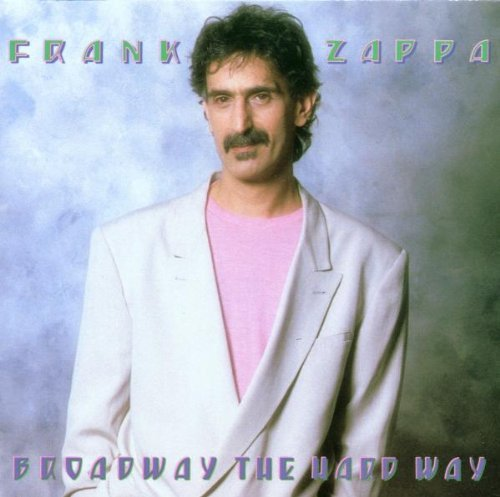
zappaFrank Zappa and the Mothers
Were at the best place around

In Memory of Frank Zappa

Prostate Cancer Victim

Yes, we got a site permit. Yes, a construction fence is up, though I have not seen it yet, and by the time I get to our lot it may be buried by snow. But that is all the update on the house you are going to get today. It is soapbox time. For those of you who don’t like medical news, cover your eyes or skip to another blog, but this pathologist needs to unload!

The Centers for Medicare & Medicaid Services (CMS) is the federal agency that, you guessed it, runs Medicare. Part of what they do is establish “quality” measures and review bills and electronic medical records to determine how well physicians are following in line with these measures. For the last few years, compliance with these measures has had an effect on how much Medicare pays physicians for patient treatment, and this impact on reimbursement is scheduled to grow over the next few years, with penalties for docs who don’t keep on the straight and narrow. So these measure can have an impact on how doctors practice.

Now you all know I look at a lot of prostate biopsies in my practice, and that my dad died of prostate cancer, and that I run every year to raise money for prostate cancer awareness. So prostate cancer is a big deal to me. Most of the prostate cancers that I diagnose are a result of a man having an increased Prostate Specific Antigen (PSA) blood test in their primary doctors office and being referred to a urologist for evaluation and triage with such newer tests as the PHI test or MRI of the prostate. Sometimes the triage leads to a prostate biopsy. Close to half of the men who have a biopsy sent to us wind up having prostate cancer diagnosed. The goal of all this is to detect men with prostate cancers that are high grade, bad actors that  have the ability to spread, cause symptoms, and shorten the patient’s life. We want to see those men treated with therapies such as surgery, radiation, hormones or newer immune therapies in an attempt to improve their lifespan and quality of life. We also detect a lot of men with prostate cancers that look less aggressive and might not have such a significant impact. In the past, most of these low aggression tumor patients also received treatment such as radiation or surgery, but now, with better tools that look into the actual genetic (DNA or RNA) makeup of the tumor, and with better understanding of which tumors are likely to spread, many men are placed on “active surveillance.” They are monitored closely by their urologist, but unless there is evidence that the tumor has changed and become more aggressive, they avoid treatment and any related side effects.

Still following me? Well, in the last few years, there has been review of long term data, much from outside the USA and all of it is from before genetic markers were available and before “active surveillance” was an established treatment plan. The data suggested that PSA testing is a lousy way to detect prostate cancer and leads to too many men having too much treatment.  Because of these studies, in 2012 the United States Preventive Services Task Force (whew) recommended AGAINST PSA screening. So fewer men have been getting PSA testing, or have been skipping a few years of testing, and guess what? We now see more men with the nasty acting prostate cancers than we did five or ten year ago. It seems to us here in the lab (and to urologists and pathologists around the country) that less PSA screening=worse outcomes.

Now remember those CMS quality measures we were talking about a few paragraphs above? Well, the CMS has just released a new proposed quality measure. You guessed it. They are proposing that NOT doing PSA testing is better quality. So your doc, or your dad’s doc, or your husband’s doc will get paid more for NOT doing PSA testing on their patients. Yes, I know it is not a perfect test. It is not appropriate in certain age groups. But with logical triage of patients with abnormal PSA results, and then logical treatment or surveillance of men in whom prostate cancer is diagnosed, PSA testing can lead to a strong, positive, impact on the male population. I am a believer. I know that I will keep having my PSA checked–and so should you!

Comment, share, subscribe.

Type your email address in the box and click the “create subscription” button. My list is completely spam free, and you can opt out at any time.

Five Things We Get From Our Parents

AlanisIsn’t it ironic…

…don’t you think?

Alanis Morissette-1995

There is a bit of hoopla this year about the 20th anniversary of the release of “Jagged Little Pill,” the Alanis Morisssette album that, at least for awhile, turned the young singer-songwriter into a superstar. Laury was 9 at the time and wanted to buy the album, featuring the song “You Oughta Know”, but Barb and I objected. The lyrics  were even more blatantly sexual than the usual pop music of the time. In a bit of irony, “You Oughta Know” reached our car CD player anyway, by means of the “1996 Grammy Award Nominees” CD. Alanis got her Grammys, and Laury got her song on her dad’s CD player. I hope Alanis has turned out OK, I know Laury has.

As parents we try to bring up our kids in a way that will make them safe and, we hope, reflect who and what we are. In some places and times this becomes impossible, and as Chicagoans and most of the country have read this week, the results can be tragic. But I am a little pensive this  morning, thinking about just what got passed from generation to generation, l’dor v’ v’dor.

  1. Physical appearance–I look in the mirror every morning and see Dad staring back at me. The physical resemblance is now striking. I am taller and a bit huskier, but as far as facial features and  hair color, I have become the man my father was at this stage in his life.  Michael is following our pathway too. A very dominant Y chromosome.
  2. A sense of commitment–I know that Dad woke every morning at 4:10 to make the journey via CTA bus and the El to his white color job, arriving at  by 7 a.m on the dot. No complaints, it is just what he did 6 and occasionally 7 days a week. I follow that almost obsessive pattern, but at least I have modified it to 5 days a week at 5:05. And no need to wait outside in the rain or snow at a bus stop. Dad never learned to drive, I sure as hell did!
  3. Love for a good read–There are three reading habits I picked up from Dad. Time Magazine every week (something I still do), Ellery Queen Mystery Magazine every month (something I fear I have grown away from), and a good novel anytime (something I still love.) Right now I am in the middle of three novels–a Joseph Finder audio CD in the car, a Daniel Silva hardcopy on my nightstand, and “Day of Atonement” on my Kindle for a book club I am joining. Dad would be proud.
  4. Love of baseball–The only sport that Dad enjoyed watching. A love he passed to me, a love I have passed to Michael. Dad never saw a championship, I got mine ten years ago, Michael’s may be right around the corner.
  5. Our lifespan–OK, this one is not precise. But we know that genetics do play a role in how long we will be around. And here is the irony.  Dad died from widely metastatic prostate cancer and, quite coincidentally,  I am spending this part of my professional career diagnosing and aiding the treatment of men with the same disease. I get my annual PSA, I run and raise money for Prostate Cancer Awareness, I gave up red meat (right, yeah, how long did that one last?) Hopefully the good karma will help me combat any bad gene juju that may have gotten passed down the line.

Not much on the house…signed a few papers for the Homeowners Association and now they have officially blessed us. I suppose they used Holy Water from the pond next to the lot. May the Good Lord have us digging before the pond becomes an ice rink.

OK–we got somber and introspective today. Have a great weekend and I promise lots of laughs by Monday!

Read, comment, subscribe, help me get the Facebook page running. Winter is coming!


Type your email address in the box and click the “create subscription” button. My list is completely spam free, and you can opt out at any time.