A Day at Home Depot Shines A Light On My Past

I sometimes miss the simple life.

Growing up in Rogers Park I frequently accompanied my mother on an important mission. As we walked through the neighborhood, I was trusted to carry a small rectangular piece of stiff white cardboard. The card was not a postcard or an invitation. It was a bill, our monthly chit from Commonwealth Edison, the city’s sole electricity provider.

Mom and I were not out to pay the bill. Like all of our family payments, that duty was handled by my dad, a meticulous bookkeeper who was never late meeting a financial obligation. The journey Mom and I were on was to a neighborhood hardware store, where we could present the bill in exchange for 10 light bulbs.

The bulbs were “free”; their cost was likely built into our monthly bill. At the store, we could choose from any of the available bulbs. And what was available? We had a choice of 60, 75, or 100-watt incandescent light bulbs. Standard light bulb shape, standard light bulb size, standard light bulb base. They were a perfect fit for every fixture of our apartment.

I remembered the lightbulb task this morning while standing in Aisle 1 of the Home Depot store in Northbrook. I was there because a 60-watt incandescent light bulb, one of the three bulbs in the ceiling fixture of our home office, had burned out. My goal at the store was to find equivalent LED replacements for all three bulbs.

Through more than 7 years of service, the incandescent bulb had projected a warm yellow glow through the glass base of the fixture. That’s what I was looking for as I studied about 400 shelf-feet of bulbs at the Home Depot. They were virtually all LEDs but beyond that, the variations and choices were uncountable and unimaginable.

There were long bulbs, short bulbs, round ones and square ones. Candelabra bases, standard bases, and something in between. Bright white, soft white, daylight, and plain white. There were even smart bulbs that changed colors with your mood, your music, or your appetite. Overwhelmed, I chose some daylight bulbs, assuming they would project light with a soft, sunny, slightly yellow appeal.

I was wrong. The new bulbs filled the home office with an unpleasant, glary, harsh, white light. Twenty minutes later I was back at Home Depot exchanging those bulbs and grilling the store clerk on the best bulb for my needs. We chose soft white bulbs and the soft yellowish-white light is just what I like while I sit at my desk typing this post.

We have traveled a long way since those Rogers Park days in the 1960s. Technology has gifted us a wonderful assortment of energy-efficient, environmentally friendly, and cosmetically stylish light sources. But sometimes, in our quest for progress, we lose sight of the small, simple treasures that once illuminated our lives—like a walk with Mom and a bag of light bulbs.


Mommy Vs. Marshall. Who Can Stop A Five-Year-Old’s Tears

A couple of nights ago, Barb and I shared a small nighttime crisis with our grandchildren, 5 1/2-year-old Nat and 2 1/2-year-old Molly.

Our daughter Laury and her family have been living with us recently while their home is being remodeled. Tuesday night, to allow Laury and Alex to celebrate their anniversary with a dinner out, Barb and I took over bedtime duty in our kid-friendly loft.

Getting washed up and into PJs went smoothly. Barb read a chapter from The Wizard of Oz and we followed that by singing our personalized version of the Mickey Mouse Club theme song, a tradition that goes back to when our own two children were young.

“Kids, tomorrow morning I have a special surprise for you, ” I said, as Nat and Molly took our hands and we walked to their Jack and Jill bedrooms.

“What is it?” they asked in unison.

“Tomorrow!” I reminded them.

Final bedtime preparation went swimmingly until Nat’s face scrunched up, and his rapidly blinking blue eyes fought to hold back his tears. We expected to hear him cry for his mommy, but that wasn’t his issue.

Nat had done an inventory of his “stuffies,” the stuffed animals that share his bed at night, and discovered that one of his favorites, Marshall, the Fire Rescue Paw Patrol pup, was missing.

“Where is he???” Nat moaned.

As his tears flowed with worry we searched everywhere–under the soft yellow covers; under the bed; in the bathroom sink. Marshall wasn’t anywhere. He had vanished and Nat was inconsolable.

I quickly realized that finding Marshall was a lost cause and that we needed a good distraction. I struggled to think what might calm the young boy down enough to let him fall asleep. And then I remembered my planned surprise.

“Nat, if I show you tomorrow’s surprise right now, will that help you stop worrying about Marshall and fall asleep?” I asked.

“I think so,” he whispered, wiping his tears. “Maybe.”

“Come sit next to me and we can look inside this box,” I said, gesturing to a pink file box I had unearthed in a cupboard an hour earlier.

We opened the box to find a stack of Laury’s old school photos, craft projects, letters from camp, and more.

As he saw the first picture, Nat exclaimed, “That’s my mommy!” At the thrill of seeing Laury’s memorabilia, Marshall the missing rescue dog was quickly forgotten.

We went through the box, laughing at school pictures from each grade, group shots from Banner Day Camp, and ensembles from Miss Marsha’s Dance Studio. Nat eagerly hunted for Laury in every shot. And where did we find her in each photograph? In the front row, of course!

“Mommy was so little!” Nat declared with surprise and delight.

“Yes, she was–but she grew up, and you will too,” Barb promised Nat as she pulled the covers over his tired body. “And now it’s bedtime. When you wake up, Mommy and Daddy will be home, and we will all get together and find Marshall.”

And that is what we did. It’s so much fun to make new family memories while we remember old ones!


A Snowy Night In Chicago –1979

A recreation of that long, cold, walk. Photo created by Dall-E

Looking out at this snowy January day takes me back 45 years, to the very beginning of my marriage to Barb, and to a snowstorm that paralyzed Chicago. The Blizzard of January 12-14, 1979 dumped about 20 inches of snow on the city and surrounding area–and led to one cold and frigid walk through Skokie, a northern Chicago suburb.

I was doing a fourth-year medical school rotation in gastroenterology at Weiss Memorial Hospital in Chicago’s Uptown neighborhood, while Barb was early in her Occupational Therapist career at RIC, Chicago’s famed rehabilitation center, just off the Magnificent Mile downtown. Knowing that a storm was brewing, we both elected to take public transportation–a walk to the Skokie CTA station for a short journey on the Skokie Swift, a transfer at Howard Street to the main North-South “L,” from which I would get off at Wilson, and Barb continue on to the Chicago Avenue stop.

As the storm approached, I was able to leave my rotation early, and reversing my morning route, made it back to our Skokie home without incident. For Barb, the situation was quite different.

After seeing her last patient of the day, Barb trudged through the falling snow the the subway stop. Following her descent down the elevator to the platform, she found herself engulfed by hundreds of commuters, the daily regulars plus the throngs of people like her who had opted not to drive on that wintery day.

As Barb waited on the northbound platform, two, three, four trains hurtled past, overfilled with passengers and not stopping at her station. Before panic set in, Barb decided to head in the other direction and was able to board a train that took her four stations south. From here, she was finely able to board a northbound train.

More than an hour later, in the black and cold, Barb disembarked from the Skokie Swift and began the half-mile walk to our 2nd-floor walk up on Lavergne Avenue. The snow was blinding and the temperature falling rapidly. Barb struggled as she slowly made her way, huddling in doorways every few minutes to try to regain some warmth in her fingers and toes.

In the meantime, I had called Barb’s parents wondering if they had any idea where she was or if they had heard from her. In those pre-cell phone days, we were all as deeply in the dark as Barb. Finally, close to three hours after she had left the bright lights of the rehab center, Barb made it up the stairs to our apartment, home at last.

Barb vowed that evening never to take a Chicago “L” ever again. Since then we have ridden the subways of New York City, Boston’s famed MTA, London’s Tube, the Paris Metro, and Berlin’s U-Bahn. But I don’t think Barb has ventured onto a CTA platform since that frigid day 45 years ago. Some promises you keep.


Enter your email address in the box to subscribe. No spam ever.

“Do We Know Doug Rhone?”

“Babe, do we know anyone named Doug Rhone?” Barb asked me as she got out of bed this morning. “I was having weird dreams again. Jews were being rounded up and a man named Doug Rhone was telling us to escape to Texas or Canada.”

During this current spate of antisemitism, having a nightmare of Jews being rounded up, although tragic, is easily explainable. The more startling part of Barb’s dream to me was her mention of Doug Rhone. I did once know Doug, but Barb had never met him. Through the strange workings of the subconscious, Barb had brought up a name she had probably not heard in more than 40 years.

I first met Doug in 1976, when I was a 2nd-year medical student at the University of Illinois in Chicago. With a class of over 400 students, many of us were exiled to surrounding community hospitals for our 3-month long course in pathology. I was assigned to Illinois Masonic Medical Center in the Lake View neighborhood. Our handful of instructors were led by Dr. Douglas Rhone, the new Chairman of Pathology at Masonic.

The students were a rowdy bunch; most of us had no interest in pathology and were more interested in our simultaneous P-Dog (physical diagnosis) lectures and our first experiences examining patients. It would have been hard to predict that two of us would wind up as pathologists.

But by the time my third year of school rolled around, I had chosen pathology as a career. I spent a month doing an elective rotation in the lab at Masonic, as well as months at Northwestern Memorial and Evanston Hospital.

When it came time to rank hospitals for our upcoming residency training, I opted to put Evanston at the top of my list and I landed there on the notorious “Match Day,” the day when medical students around the country learn where their internships and residencies will be. I told Dr. Rhone my decision, and while he was disappointed with my choice, he made me promise to look him up in four years when my residency would end and I would be looking for a permanent position.

It only took three years until Illinois Masonic needed an additional pathologist. Dr. Rhone selected someone from my program at Evanston who was completing his residency a year before me. When I finished my residency the next year I contacted Dr. Rhone, but he told me there were no positions in his department. I wound up practicing at a suburban Chicago hospital.

I had no more opportunities to speak with Dr. Rhone since that day in 1982. In truth, I rarely thought of him. A brief survey of the Internet shows that he passed away in 2011, a death I was not aware of.

You can imagine how stunned I was to hear Barb ask her question this morning. How was it that her brain had held on to Doug Rhone’s name and it appeared in a dream more than 40 years after she had last heard it? The future may be the era of artificial intelligence, but can that ever be as complex, as surprising, or as astounding as our own minds at work?


These People Are Why I’m Radio Ga-Ga. Who Did It For You?

I don’t do Spotify. I don’t stream Apple Music. When Alexa asks me if I want to sign up for Amazon music, I ignore her, even when she offers me a 90-day free trial of all my favorite music. I know how 90-day free trials turn into $9.95-a-month subscriptions in a hurry.

I was born and bred to listen to the radio Chicago style. There were WCFL and WLS in my grammar school years. I spent many Fridays walking down Morse Avenue to the local record store to collect their music surveys and see what was at #1. WDAI (pre-disco) and The Loop, along with a taste of WGN, were my companions early in my professional career. Next, The Drive held my attention for a few years but by the late 2000s I had morphed into a WXRT listener, and for the most part, remain that way today.

Behind the radio call letters and station names have been the varied personalities I have listened to. Each epoch had a jock or two who kept me listening, even after the music had stopped. In some cases, they didn’t play much music at all, and that was OK too.

I’ve spoken before about Joel Sebastian, the smooth morning man at WCFL, and later at many other Chicago stations. When Chicago radio, and my own tastes, evolved, I discovered Steve Dahl in his early solo days. I didn’t know what to make of his humor and stunts, but by the time he paired with Garry Meier, I was hooked on his style of very personal radio. I couldn’t have guessed then that his wife Janet’s school board adventures would be a forerunner of my own.

Dahl and Meier served me well on my morning commute, but once I reached my hospital laboratory office, I tuned in to a more “work-appropriate” radio format with my radio-wave friend Roy Leonard. Sadly, I think that I won more radio call-in contestants on Roy’s show than I answered questions correctly during my one Jeopardy! appearance. I finally had the opportunity to meet Roy before a show at Chicago’s Second City–and yes, I was there after winning the tickets for the performance on Roy’s show.

Mr. Leonard was followed on WGN by the combo of Kathy O’Malley and Judy Markey. I presumed I was the only male in their radio audience–a feeling reinforced when a male oncologist friend reviewing some slides at my microscope asked how I could listen to those babbling idiots. I think his chauvinism was peeking through.

And then came everybody’s best friend in the whole world, Lin Brehmer. When my daily morning commute doubled in length with my new company and new position, I fell into WXRT. I timed my drive so that I would arrive at the lab just in time for Three for Free, Lin and Mary Dixon’s morning musicology quiz, battling it out with Mailman Jack, Brad Frey, Cathy Chouinard, and many others. Lin’s death felt to all of us like the loss of a valued and loved co-worker.

Lin was my man at ‘XRT, but a shout-out to Terri Hemmert, who last week celebrated 50 years on WXRT with a Saturday Morning Flashback to the year 1973. That was a good year with great music, and even better memories.

Long live Chicago radio–I hope it never goes away.


Like what you read in our blogs? Click below for a free subscription. Never miss a post.

Bagesl, Bagels, Bagels. Memories Go Round and Round.

“Should we stop for bagels?” I asked Barb on Sunday night as we closed in on the Touhy exit on the Edens Expressway. It was late, we were coming home from watching “The Lehman Trilogy” a three-hour play at Water Tower Place, and I was tired, so I stayed in my lane and sped past the exit ramp.

The store we bypassed was the New York Bagel & Bialy shop. We passed it this week, but for many years it was a regular Sunday night stop for us. That was family night, as we packed the kids into the minivan and visited my parents and aunt in Rogers Park.

Some nights my mother would cook–her Weiner Schnitzel is still one of my all-time favorite meals — most weeks we would visit a local restaurant. Bones in Lincolnwood was a consistent favorite, and it continued to be one after it was rechristened L. Woods. Or we might venture to Hi Howe for a Chinese feast (something my dad would never have consented to when I was growing up.) And no one ever complained if we drove to Wilmette to enjoy breakfast-for-dinner at the original Walker Brothers location.

Once the seniors were settled back in their apartments, we turned west on Touhy and headed for home. But nine weeks out of ten, just before we reached the Edens entrance I would pull into the narrow parking lot in front of New York Bagel & Bialy.

In those days the store was open 24 hours a day. I’d walk into a steamy miasma, the odor of baking bread filling the air. The same counter woman always took care of me, whether she recognized me I could never tell. I would ask her for a dozen bagels, balancing plain, sesame seed, and poppyseed varieties. And there was always a 13th bagel, the baker’s dozen bonus, for us to split up and enjoy on the rest of the car ride home.

I know my health is better off for my not stopping to grab a dozen bagels last week. And I am pretty sure that the taste just wouldn’t be the same as the melt in the mouth goodness I remembered from 30 years ago. But next time I am driving onTouhy or flying down the Edens I think I’ll make that bagel stop one more time.

Make that bonus bagel a sesame seed, hot out of the oven.


Like what you read? Enter your email to subscribe to our blog.

Memories and Generations at the Start of a New Year

For most, Rosh Hashana, the Jewish New Year, is a time to look ahead, to the upcoming good and sweet year, ushered in with prayer, apples, and honey. But as I davened in temple this year, I found my mind drifting, envisioning the many ages of my life and the assorted Chicago-area locales where I have listened to the blowing of the Shofer on this ancient holy day.

Rogers Park in the late 1960s. Standing with friends on Pratt Avenue after youth services at B’nai Zion Synagogue. In my mind, those services were interspersed with ones on the bleachers of Loyola Park, a small mimeographed cardboard rectangle being the ticket to admission. All leading up to the one astonishing moment when the youth leader carrying the Torah past the young congregants tripped (or was tripped,) almost dropping the sacred scroll to the ground. A stern warning to all followed; had the Torah dropped to the floor, we would all be fasting for 40 days!

in 1970, as a high school junior, I was called upon to prepare and lead a Rosh Hashana teen service. Along with my collaborator, we culled news stories and ancient fables to choose readings that would be relevant to our fellow teenagers. Fitting for those violent times, our readings related to the war in Vietnam and the tragic shootings at Kent State a few months earlier.

A few years later a college friend invited me to join her at High Holiday services at a lovely synagogue on the shore of Lake Michigan. The setting was inspiring. But this was the year 1973. Ten days after Rosh Hashana, Egypt and Syria attacked Israel to initiate the Yom Kippur War.

Twenty years later Barb and I were a married couple with young children. The family worshipped on Rosh Hashana in the old auditorium at Stevenson High School. In a bit of karma, the Rabbi was the same Rabbi who had officiated at my Bar Mitzvah decades earlier, when he was an itinerant Rabbi who had only recently moved to Chicago. In more karma, sitting in the auditorium foreshadowed my upcoming long association with Stevenson High School.

As the kids grew, so did the need for Hebrew School and Bar Mitzvah lessons. To minimize carpool time, we joined a congregation near our home. High Holiday services were scripted, lengthy, and maintained every ritual. They were everything but inspirational, and when the Bar and Bat Mitzvah’s were over, so was our synagogue membership.


A few years later, Stevenson High School beckoned once more, this time with services in the Performing Arts Center. The setting was livelier and so was the spiritual leader, a young cantor training to be a Rabbi. Accompanied by a professional choir he gave life and breath to the services. In his sermons he challenged the congregants with questions, his assistants roaming the auditorium with microphones seeking out answers. We enjoyed those Rosh Hashana services for many years until COVID silenced them.

Today, post-COVID we pray once again, this year at our son’s congregation along with his wife and our granddaughters. My favorite Hebrew saying has always been “L’dor vdor”–“From Generation to Generation.” The circle of life continues.

May all the days of your life be good ones. L’shana Tovah.


Like what you read? Enter your email address to subscribe to our blog and never miss a posting.

Doin’ The Laundry, The Old Rogers Park Way

1967. The tiny commercial laundry was tucked under the Lunt end of the Morse-Lunt L stop in Rogers Park. Next door was the small variety store where the neighborhood kids would buy gleaming white rubber balls with raised stitching, the kind we would use to play fastpitch with in the schoolyard down the block.

My family’s apartment on Farwell east of Sheridan had plenty of advantages–it was close to the beach, the pier, the tennis courts, and the notorious Farwell Park bubbler — but the building was old and lacked a clothes washer and dryer, even in the musty basement.

On Monday mornings my mother would load our laundry cart, the upright type on two wheels, and pull it the 4 or 5 blocks along Lunt to the laundry. My Tuesday afternoon chore? I was to stop at the laundry on my way home from school, pay the $2.00 charge, and pull our cart, now full of clean, neatly folded clothes back to Farwell and up the three flights of stairs to our apartment.

The proprietor of the laundry was a middle-aged man, though he seemed very old to me. He spoke with an accent I wasn’t worldly enough to place. I recognized that he was foreign, just as my parents were. We would speak a few words as I carefully pulled a pair of wrinkled one-dollar bills out of my pocket and handed them to him. In the summer the heat in the laundry was nauseating, but on cold winter days I would luxuriate in the steamy warmth as I waited for him to retrieve our cart.

I was always careful to make sure no one saw me duck into the laundry. I would hope none of my friends were buying baseball cards or a candy bar at the store next door as I stepped outside to begin the trudge home. I don’t know why I found it so embarrassing, I was just doing a necessary chore, but as adolescents, don’t we find many things embarrassing?

I rarely get to Rogers Park these days. Maybe I will pack the grandkids in the car and give them a tour of the neighborhood I grew up in. I will show them the schools, the restaurants, the synagogues, and the location where my apartment building once stood. If the kids aren’t too bored I’ll include the spot under the L. And hope the fragrant steamy aroma of drying laundry still fills the air.


Like our blog? Fill in your email address below to subscribe.

Last chance to show support for the Zero Prostate Cancer event this Sunday. If you can, click HERE to donate.

Note: Further research indicates that the top photo MAY not be the Morse L station. My apologies for the error and any inconvenience.

An Old Bookcase Became My Rogers Park Refuge.

The apartment was on the third floor of a Rogers Park six-flat, on Farwell Avenue east of Sheridan Road. My family lived there in the 1960s, wedged between a small orthodox shul to the west and a foreboding-looking nursing home to our east.

My bedroom was at the front of the apartment. French Doors opened onto a small balcony, the perfect site for calling out to friends waiting below or for launching snowballs at slowly moving cars after the Blizzard of ’67.

My narrow room was barely wide enough for a single bed and my bookcase. A Chicago White Sox poster and a near-life-sized rendering of Alfred E. Neuman adorned the walls.

It was my wooden bookcase that I remember most fondly. I don’t know where my parents found it and I doubt that it was new when they made the purchase. Always economical, even their own bedroom set was purchased via the “Used Furniture” section of the Sun-Times Classified Ads. Old or new, the bookcase contained almost all that I cherished.

The top of the bookcase, at a little over waist high, was covered with knickknacks–a coin bank, a gold-plated Empire State Building, a kippah from a cousin’s wedding. Cool, but the best stuff came on the shelves below.

Ninety percent of the top shelf was filled by my collection of the Tom Swift Jr. book series. While most other kids I knew were reading the Hardy Boys, I was getting my introduction to science through Tom and his buddy Bud Barclay. On each birthday my parents would add another volume of the hardback yellow-orange spined books to the shelf. Soon those contributions were outpacing the rate at which new books in the series were published. After 33 books the series and my collection came to a halt.

After the row of Swifties came shelves and shelves loaded down with over 100 books, predominantly paperbacks gathered throughout my childhood. I carefully curated them, filing each in alphabetical order, by author. There were Agatha Christie whodunits followed by Beverly Cleary books for kids. Arthur Conan Doyle had a place, as did a book of mathematical games written by Scientific American’s Martin Gardener. After Gardner came two volumes from German author Erich Kästner, courtesy of Uncle Herbert in Switzerland.

Ngaio Marsh’s Artists in Crime, a British mystery much too sophisticated for my youngish eyes, must have originated on my father’s reading table but found a permanent home among the “M’s”. John Tunis’s baseball sagas were well represented as well. And somehow I found space for a few joke books, along with biographies of Helen Keller and Thomas Edison.

The bottom shelf was for treasures. Oversized books of Greek mythology from my Aunt Paula and Uncle Poldi lay next to stacks of dog-eared, folded-in Mad Magazines. A shoebox held my 1964 Topps baseball cards, just a Dal Maxvill card #563 shy of a complete collector’s set.

In 1970 our family moved to another apartment, across the street on the south side of Farwell. As a classmate of mine put it, we were moving to a better neighborhood. I don’t remember why, but my bookcase and most of my beloved books didn’t make the half-a-block move with us.

I don’t have much of a bookcase anymore. I read loads of library books and indulge in way too many online articles, so there is no need for an old bookcase with sagging shelves. But I would love one more crack at the bookcase of my youth–and a final chance to find that Dal Maxvill collectible!


Hey! Can you do me a favor? If you are a subscriber and enjoy my blogs, please email them to friends and contacts. And if you read my blogs on Facebook, please share them! We are always looking for new readers.

You can always get a hold of me at chidoc@post.com Look forward to hearing from you.

Read last week’s blog here.

Filling My ARC

A few days ago the morning news mentioned that there were 74 days left until Christmas. Doing some simple math, I determined that meant there were 80 days left until my retirement.

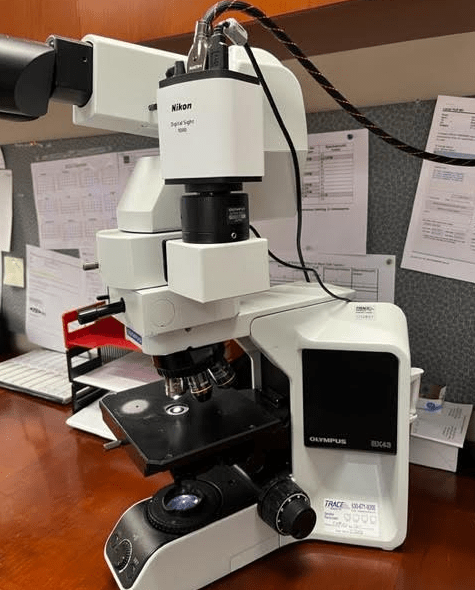
The nearness of Retirement Day to Christmas Day got me thinking–if I had an Advent Retirement Calendar (ARC), what would it look like? What would be behind each of the 80 doors that I would open before I turn off my Olympus BX43 microscope for the last time?

I am sure the first few doors would open up to my education. Doors for an undergraduate curriculum balancing STEM courses I survived (physics, quadratic equations, quantum mechanics) with literature courses I loved (Russian Lit, Female Writers of the 20th Century, The British Novel.)

Flip open some doors for the four years of medical school. The first year when all I learned in those tough undergrad science courses put me at the top of the class; the next three years when I discovered that patient care wasn’t for me, but that I might find my way as a pathologist.

Night school gets its own door as I left Barb with two young kids, two nights a week, so I could study for my MBA. I came away with a diploma, an award, and some finance and management concepts to help guide me. Barb survived as well.

So many doors to open for my 22 years at a community hospital, climbing the ladder until the floor underneath disappeared and the whole thing toppled. A door for my mentor from whom I learned what to do and how to not behave while doing it. A door for my associate there, whose T-shirt read “Though Shalt Not Hassle.” A door or two for the “academic” pathology group that first embraced me and then discarded me while assuring me it was nothing personal.

Many more doors for my next step, the lab that I built from nothing more than a notion in some urologist’s minds, modeling it after all I had known before. Doors for the business consultants and the early believers who got the engine running, and more doors for all who climbed aboard the train as we chugged along to excellence. The riders on that locomotive knew my real door, the door to my office, was always open.

Doors for all the inspections I endured at my lab, and all the inspections I inflicted on other labs. Hopefully, things were learned by all parties along the way.

Doors for my lab companions who passed away during our shared careers and have never left my mind: Earl, Ramji, and Al at my first stop, Cindy and Paul at my second. You have all been missed.

Doors for the cherished automobiles I powered down the tollway — perhaps a quarter of a million miles since 2005.

And of course doors for my family and friends who were always with me and supportive, through busy days and sleepless nights.

I trust I have filled up my ARC. And I trust whatever lies ahead will be just as amazing.